


有馬温泉入初式 – Arima Onsen Irizome-shiki

On invitation from a very nice family acquaintance, my family and I joined them in attending Arima Onsen’s New Year’s ceremony.
Said to be the oldest hot spring in Japan, Arima Onsen has a history of over a thousand years. It is known for having two types of waters that visitors can enjoy at various spots around the town. The first is (“gold water”), which is colored brown with iron deposits and is said to be good for skin ailments and muscle pain. The second is (“silver water”), which is clear and contains radium and carbonate and is said to cure various muscle and joint ailments.
As part of the New Year’s celebrations, this ceremony is held on the second of January every year to pray for the continuing prosperity of the hot spring. The ceremony also pays respect to the two priests Gyoki and Ninsai who were responsible for restoring Arima Onsen after a flood in 1097.
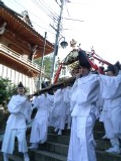
The day started with a procession from Onsen-ji to the ceremonial grounds (which happens to be Arima Elementary School). It is led by the local Shinto and Buddhist priests, the proprietors of Japanese inns, musicians, and a group of geisha in traditional bathhouse costumes. The main feature is a palanquin housing wooden sculptures of the high priests Gyoki and Ninsai as well as Onamuchi-no-Kami, worshipped as the mythical discoverer of Arima Onsen in Japanese folklore.




At the ceremonial grounds, after the rites had been performed, the first hot water of the year is poured in appreciation of Gyoki and Ninsai. Then the “ladies of the bathhouse” churn the water in step with the beat of a drum until it becomes the right temperature. Local geisha also perform a dance, after which rice is spread on the floor and they rake them using young pine branches and wrap them in white paper to make an amulet.


The event isn’t highly publicized, and is largely attended by locals (as in everyone pretty much knows each other). For those who don’t speak any Japanese it can be quite difficult to understand. However, it can be quite enjoyable to see a smaller, more personal festival for a change.

Comments