


The South could have won

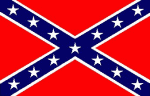
Ok, so I’m a closet Confederate fan. Who can resist the gallantry of Robert E. Lee, the reluctant mastermind Commander in Chief of the South and the impassioned scream of barefoot soldiers advancing on the battlefield amid the Rebel Yell. In Ken Burns’s documentary The Civil War, Shelby Foote notes that historians are not quite sure how the yell sounded, being described as “a foxhunt yip mixed up with sort of a banshee squall.”
What I learned in school was… the North was the economically, technologically and resource superior combatant. There was a complete naval blockade strangling the South of resources and the moral justification of Slavery. Then we look at the famous Battle of Gettysburg and then all momentum swings to the North. What seems to be glossed over is most of the battles leading up to Gettysburg. But first things first, thank God the North won, as we all have benefited from that. And now, the rest of the story…
Change just one event two months prior to Gettysburg and IMHO, the South wins the war. The event that changed everything was Stonewall (TJ) Jackson getting fatally shot by his own troops as he was scouting the enemy’s lines in the middle of the night before a battle that was to start in the morning.
By 1862, Jackson was recognized as one of the most effective commanders in the Confederate army. Leading his force on one of the most brilliant campaigns in military history during the summer of 1862, Jackson marched around the Shenandoah Valley and held off three Union armies while providing relief for Confederates pinned down on the James Peninsula by George McClellan’s army. He later rejoined the Army of Northern Virginia for the Seven Days battles, and his leadership was stellar at Second Bull Run in August 1862. He soon became Lee’s most trusted corps commander.
The Battle of Chancellorsville was Lee’s and Jackson’s shining moment. Despite the fact that they faced an army twice the size of theirs, Lee daringly split his force and sent Jackson around the Union flank—a move that resulted in perhaps the Army of the Potomac’s most stunning defeat of the war. When nightfall halted the attack, Jackson rode forward to reconnoiter the territory for another assault. But as he and his aides rode back to the lines, a group of Rebels opened fire. Jackson was hit three times, and a Southern bullet shattered his left arm, which had to be amputated the next day. Soon, pneumonia set in, and Jackson began to fade. He died, as he had wished, on the Sabbath, May 10, 1863, with these last words: “Let us cross over the river and rest under the shade of the trees.”
Many of the leaders on both sides of the war came from West Point and VMA and the reality was that the General Lee and Jackson knew the tendencies (cautiousness) of their opponents and they often predicted how they’d react to military maneuvers and thus played them like a fiddle. As the South continued to win battles, their legend grew and the fear of this force intensified to mythical proportions. S.C. Gwynne, the author of Rebel Yell, a book about Jackson’s life (a must read) says that Robert E. Lee in a rare moment of speculation stated that General Jackson would have occupied the high ground (Little Round Top) on Day 1 of Gettysburg. If you know the battle or have at least seen the movie – that probably would have made the difference. Chilling… I still get chills thinking about this.

And now, a word on the military technology in use. Do you know what a Minié (pronounced “mini”) ball is? The Minié ball is a type of muzzle-loading spin-stabilized rifle bullet named after its co-developer, Claude-Étienne Miniéé, inventor of the Miniéé rifle. It came to prominence in the American Civil War.
Prior to the American Civil War (April 1861) there was conventional military wisdom based around the .69 caliber smooth bore rifle. The concept was that opposing forces needed to concentrate fire and put as much lead as possible in a target area to do real damage. The gun technology at the time was a hard ball with no rifling and it was accurate up to 80 yards (100 yards tops). Therefore, both sides would get within range, typically in formation, and then battle it out. The Union essentially started the Civil War with the Minié ball and two years into the war, the South also was using the Minié ball.
The Minié ball was world-shattering for these two reasons. First, it was a self-cleaning bullet that was able to leverage the rifling in gun barrels (helical grooves in the barrel of a gun or firearm, which imparts a spin to a projectile). The Minié ball was a conical-cylindrical soft lead bullet, slightly smaller than the intended firearm barrel’s bore. The bullet was designed by Minié with a small iron plug and a lead skirting. Its intended purpose was to expand under the pressure and obdurate the barrel and increase muzzle velocity. Self-cleaning meant that much faster reloading. Another advantage was the accuracy from rifling. It made the guns accurate up to 400 yards. Wounds inflicted by the conical Minié ball were different from those caused by the round balls from smoothbore muskets, since the conical ball had a higher muzzle velocity and weight. Round balls tended to remain lodged in the flesh, and they were often observed to take a winding path through the body. Flexed muscles and tendons, as well as bone, could cause the round ball to deviate from a straight path. The Minié ball tended to cut a straight path and usually went all the way through the injured part; the ball seldom remained lodged in the body. If a Miniéé ball struck a bone, it usually caused the bone to shatter. The damage to bones was usually severe enough to necessitate amputation.
There are countless stories of battles in the first year of the war with the Confederates out of range of Union troops lying on the ground taking fire from entrenched Union forces, unable to return fire. Talk about demoralizing.
Happy Thanksgiving – we have so much to be thankful for.


Comments