


The Lovin’ Spoonful (Happy 80th Birthday, John Sebastian)


John Sebastian(b.1944) turns 80 years old today. Sebastian grew up in Greenwich Village — what was it like having a birthday there on St. Patrick’s Day, I’d like to know? Well, this is my celebration of St. Sebastian.
Who happens to be, of all things, Italian, by the way! His family’s last name is Pugliese, much more of a Columbus Day affiliation. The name was shortened by his dad, the original John Sebastian (1914-1980):

Like Pete Seeger and others, the younger John Sebastian is a folk music nepo baby with posh roots. His grandfather was a wealthy Philadelphia banker. The elder John Sebastian was a harmonica prodigy as a teenager, and carved out a professional niche for himself by mastering pieces of classical music on the instrument. In his day, he was nationally known as a performer on radio and a recording artist, He performed at concert halls, night clubs, and other prestigious venues. But he also pursued folk and blues music, and his circle of friends included Sonny Terry, Lightnin’ Hopkins, Burl Ives,Woody Guthrie, Josh White, Lead Belly, and Mississippi John Hurt, all of whom the younger John Sebastian grew up knowing and learning from.
Sebastian’s mom Jane Bishir was a radio actress and script writer and also an administrator at Carnegie Hall. (The unusual surname appears to be either Arabic or Turkic). His godparents are Vivian Vance (of I Love Lucy) and Garth Williams, illustrator of children’s books by E.B. White, Laura Ingalls Wilder, Margaret Wise Brown, and others. This offbeat upbringing I think explains some of Sebastian’s later career choices that may seem uncharacteristic for a rock musician.
As a kid, Sebastian also spent a lot of time in Italy, and attended private school in New Jersey. But living in Greenwich Village proved a distinct advantage when the folk music scene exploded there in the ’50s and ’60s. He attended NYU briefly, but spent most of his time going to clubs and coffee houses, and playing his own music in Washington Square Park. As a harmonica player he sat in with jug bands and other kinds of groups, including The Mugwumps. This was how he met the incredible blues guitarist Zal Yanovsky (1944-2002). Yanovosky was also a nepo baby, of a parallel kind. His father was the left-wing Canadian cartoonist Avrom Zanovsky (1911-1979). When The Mugwumps broke up (with two of its members Cass Elliott and Denny Doherty teaming with the Phillips to form The Mamas and the Papas), Sebastian and Zanovsky, along with bassist Steve Boone and drummer Joe Butler, formed The Lovin’ Spoonful.
I’d long assumed that the band was named after the Willie Dixon song “Spoonful”, recorded by Howlin’ Wolf in 1960, and covered by Cream a few years later. But Mississippi John Hurt’s “Coffee Blues” gets us even closer, for it literally references a “lovin’ spoonful”. I’d also once heard that, like 10cc, the name referred to the average amount of spunk disgorged by the male organ at the moment of ecstasy, but in both cases that idea seems to have been the work of idle truth-embellishers. In any case, why does it need to be so literal or so vulgar? (I’ll answer that: because most people are incredibly stupid). A teaspoon of sugar or honey in a coffee cup, as a metaphor, can signify the happiest element in any concoction. If you need that to be a spoonful of semen, the best of luck to you, but I guess I won’t be shaking your hand.
It is astounding to me how brief the heyday of The Lovin’ Spoonful was. I was only an infant at the time of their ascendancy, but they remain one of my favorite bands, they represent the core of what I love. Interestingly, they were developing the idea of folk-rock at the very same time as The Byrds on the opposite coast. The Byrds beat them to the sphere of public acknowledgement but the Spoonful had been at it since the advent of the Beatles as well. (Sebastian and Boone had also backed Dylan on some tracks, but they weren’t used). Zablonky’s contribution gave the Spoonful something both The Byrds and The Mamas and the Papas lacked, which was a sound that had something more in common with many of the blues-oriented British Invasion groups like The Rolling Stones. Not all of their numbers were like that, many were more pop oriented, but they had the capacity to go there. Thus, very much like the Beatles, they played and recorded songs that could please just about everybody. And so they enjoyed amazing chart success in an incredibly short period of time. They had many more hit singles, and higher charting ones over all, than either The Byrds or The Mamas and the Papas.
Their first single, the anthemic “Do You Believe in Magic?” (#9, 1965) was almost like a mission statement about the role of art and music in human culture. Boone wrote most of their second “You Didn’t Have to Be So Nice” (#10, 1965) a very Beatley ditty that cemented their position as hit makers. Their third, the neo-vaudeville “Daydream” (#2, 1966) gets a shout-out in my book No Applause, and was one of the inspirations for Paul McCartney’s “Good Day Sunshine”. This was followed by the randy and comical “Did You Ever Make Up Your Mind?” which also went to #2 that same year. I love that their only #1, the musically sophisticated and evocative “Summer in the City” was released on July 4, 1966, priming it to be THE song of the entire summer. This was followed by the romantic “Rain on the Roof” (#8, 1966) and the hilarious country tribute/send-up “Nashville Cats” (#8, 1966).
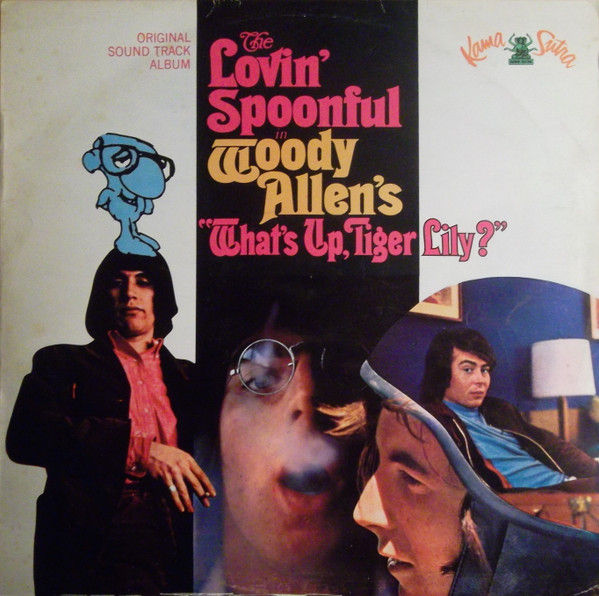
Then came, of all things, movie soundtracks! In 1966 they recorded and released the soundtrack to Woody Allen’s early experimental comedy What’s Up Tiger Lily? This was followed by one for the early Francis Ford Coppola movie You’re a Big Boy, Now (1967), which yielded the #15 hit “Darling Be Home Soon”.
In 1967, for whatever reason, The Spoonful started to slip down the charts: “Six O’Clock” (#18), “She’s Still a Mystery to Me” (#27), and “Money” (#43). It’s a little bewildering — these songs are about as amazing, inventive and catchy as the earlier ones. I think the answer may be that, as with The Byrds and The Mamas and the Papas, there were overtaken by the tidal wave of the sounds that came after them, the San Francisco groups, Hendrix, the British Blues Boom, etc.) The Lovin’ Spoonful were SO 1966! And maybe they were a little overexposed.
Also in 1967, Yanovsky left the group, a development frequently attributed to a drug bust for marijuana and ensuing deportation, though he and Sebastian were growing apart anyway. Yanovsky disliked Sebastian’s introspective ballads and pop sensibilities, and was given to openly ridiculing those songs. In 1968, Sebastian left the group as well, and here begin some of those slightly atypical life choices we referred to. In 1968, for example, he wrote the Broadway musical Jimmy Shine with Murray Schisgal, which starred the post-Graduate Dustin Hoffman as a swinging single dude in Greenwich Village.

In 1969 Sebastian played Woodstock. He hadn’t been booked for the festival but he happened to be in attendance, and there was an emergency vacancy that he leapt into. He also played the Big Sur Folk Festival the same year. He sat in with The Doors as well during this period. That’s him playing harmonica on the single “Roadhouse Blues” (1970), and he played on several live tracks with the band. He played harmonica on Crosby, Still and Nash’sDeja Vu LP (1970) and they backed him on his own debut LP John B. Sebastian, which went to #20 that same year.

Most of Sebastian’s subsequent solo work didn’t fare as well — with one important exception. In 1975 he wrote the theme song for the hit sit-com Welcome Back Kotter, which went all the way to #1 in 1976. He performed it (after a flubbed start) on one of the very first episodes of Saturday Night Live.
In 1978, Sebastian provided songs and performance for a Canadian children’s production called The Devil and Daniel Mouse. In 1980 the original Lovin’ Spoonful reunited for Paul Simon’sOne Trick Pony concert, a rare convocation. Throughout the ’80s and thereafter Sebastian continued to create music for children’s programs, while continuing to keep one foot in the blues by frequently playing with NRBQ and others.
Oh, and here’s something that’ll rock your world. His first wife, Jean “Butchie” Webber (for whom “Butchie’s Tune” is named) later married Bob Denver.
John Sebastian is still making music. His official website is here.
For more on the history of show business,consult No Applause, Just Throw Money: The Book That Made Vaudeville Famous, and stay tuned for my upcomingElectric Vaudeville: A Century of Radio and TV Variety.

Comments