


Roberto Rascovich – The Myth of Demeter and Persephone

“One summer she goes into the field as usual
stopping for a bit at the pool where she often
looks at herself, to see
if she detects any changes. She sees
the same person, the horrible mantle
of daughterliness still clinging to her.”
(Louise Glück’s poem “The Myth of Innocence”, from her poetry collection “Averno”, 2006)

Roberto Rascovich, The Myth of Demeter and Persephone, 1903
Usually the Persephone-fever cathes me in late May when the sun starts to scorch and the poppies are blooming everywhere and the fresh loveliness of late spring is giving in to the ecstasy and mad heat of summer, but this year it caught me earlier and I feel so inspired by her both in writing and in visual arts – mainly in my collages. It is the duality of Persephone that attracts me the most, I think, because, as a Gemini girl, I know all about it! If Persephone can be both a flowery maiden and the Goddess of death simoultaneously, then I can be many things as well. She inspires me to accept my polarities. The most common portrayal of the theme of Persephone in visual arts is the moment of her abduction, but this series of engravings by the Croatian artist Roberto Rascovich (Rašković) captures not only the most dramatic moment but the entire tale of her life which I think is quite interesting. Rascovich was born in 1857 or 1862, the year is unclear, in Split, Croatia, which was back then a part of the Austro-Hungarian Empire. He received his artistic education in Vienna, Venice, Paris and Rome. In 1891 he came to New York City, married an American woman, moved to Chicago and never looked back. In 1893 he already had a studio in the city and his paintings were described as “the most attractive” by the Chicago newspapers at the time. These illustrations of Persephone’s tale are among his last works, for he died, sadly, in 1905.
The Greek goddess Persephone was the daughter of Demeter who was the goddess of harvest and agriculture. Persephone spent her childhood and teenage years in an ideal nature setting, frolicking the meadows like a hippie gal and picking flowers with her friends nymphs. Demeter was fiercly protective of her precious, beloved daughter. Still, one day when she wasn’t there to prevent it, Hades, the God of the Underworld, snatched Persephone and took her into the world of the death. Upon finding out what had happened, poor Demeter was roaming the earth in desolation and all the vegetation stopped growing. She could almost get her daughter back had Persephone not eaten a few seeds of the pomegranate while in the underworld and whoever eats anything in the underworld cannot leave it. And so it was arranged that Persephone would spent six months with her husband in the underworld and six months with her mother on earth. Persephone’s arrival to earth marks the beginning of the spring and summer months, and when it is time for her to return to her husband, the vegetation withers again and winter comes. Proserpine was the Roman equivalent of Persephone and I suppose Rossetti, being Italian, chose the Roman version of the goddess for that reason.
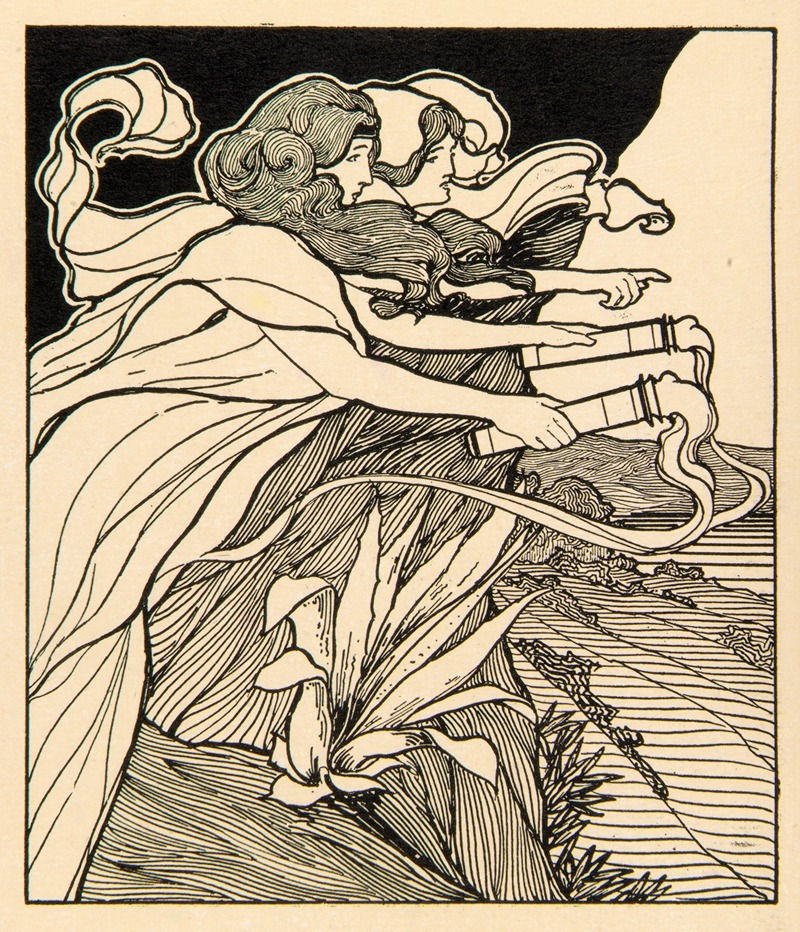
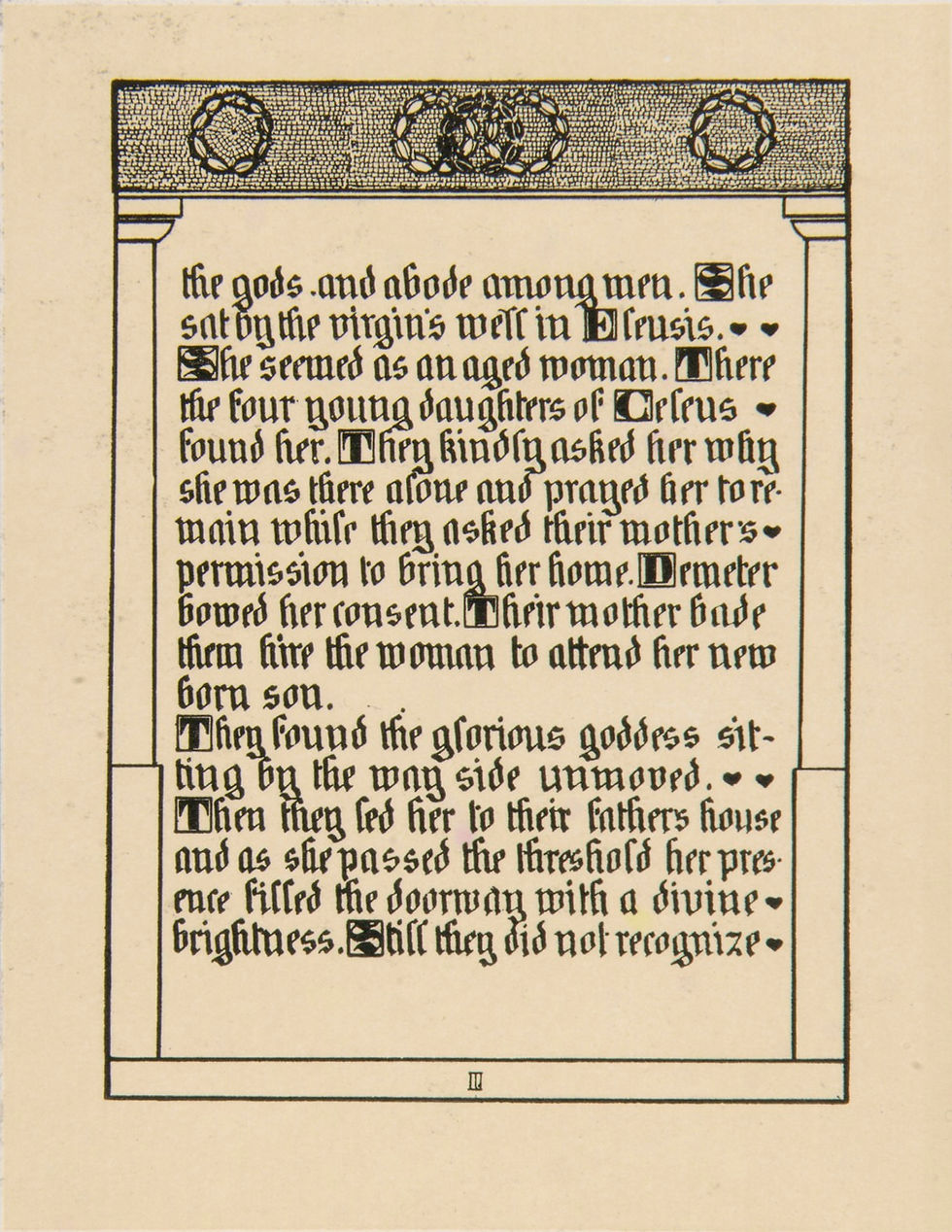
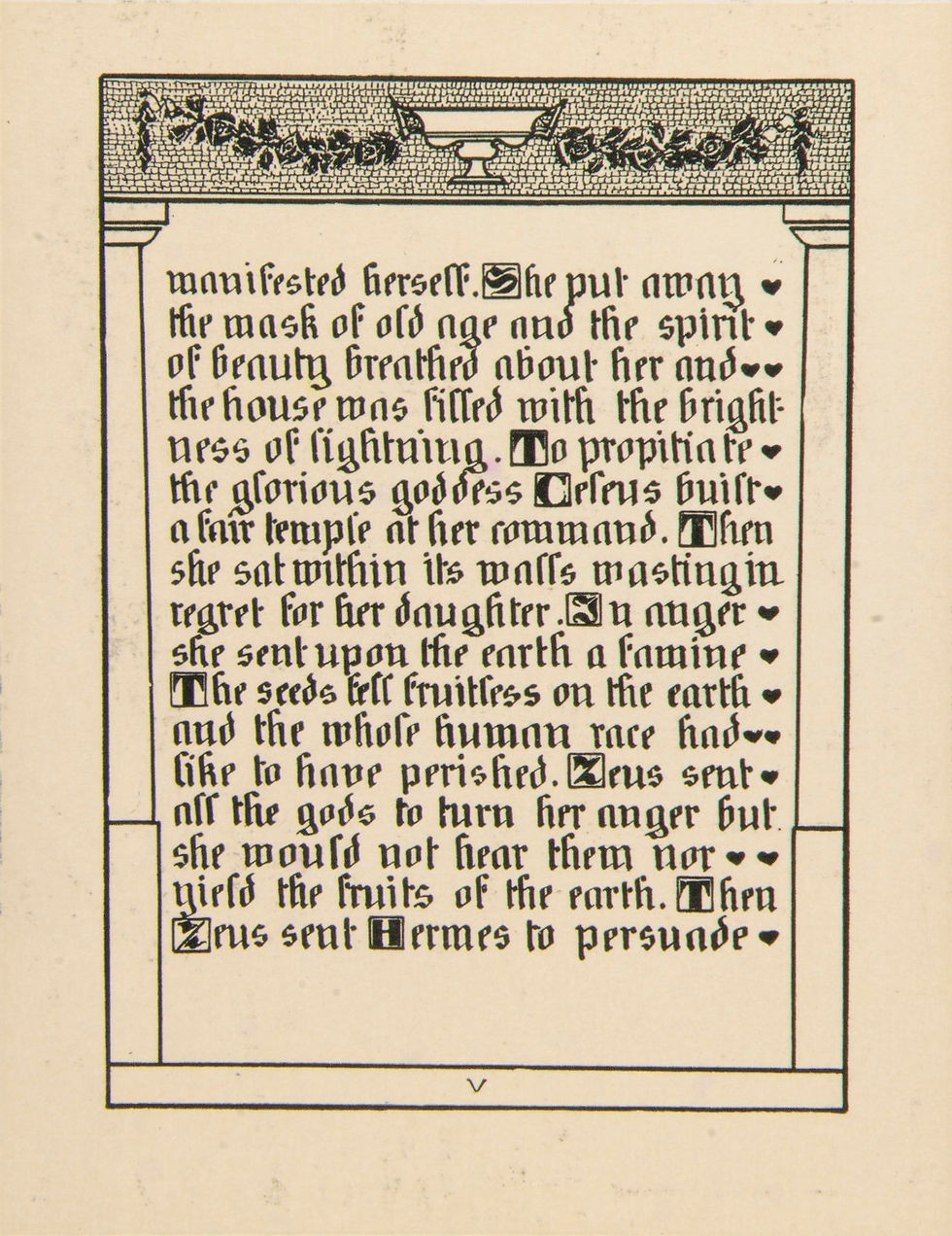
Despite there being no colour in these illustrations, the line here is powerful; sinouos, imposing, hypnotising, a true Art Nouveau queen of line. Confidence and energy are high in these etchings. Raskovich’s style here is detailed and yet on point, nothing is unnecessary and yet the scenes aren’t empty either, but bursting with details. My favourite etching is the one above which shows how it all began; the beautiful maiden Persephone is gathering flowers on the meadow when, unbeknowst to her mother, tragedy strikes and she is pulled down in the underworld by Hades. Aidoneous, as he is referred to in the text that accompanies the illustrations, is another name of Hades. Back to the first illustration; Persephone looks just lovely all alone in the meadow. Wind is playing with her hair and close-eyed, she is sinking into a revery. The scent of all those flowers blooming around her must be overpoweringly strong and sweet. Many, and many different flowers are growing in this meadow, but none is as seductive as the daffodil that eventually brings her doom. The irises in the lower right corner are such an Art Nouveau touch. Persephone stands out in her white gown against the more detailed, more dark background and she appears so dreamy, so innocent, so unassuming, that it is almost painful to know what awaits her, what changes fate holds for her. My second favourite out of these illustrations is the last one, in which Persephone reunites with her mother at last. How happy and youthful they both seem, rejuvenated by the joy of seeing one another again.






*

Comments