


RIP Paul Morrissey

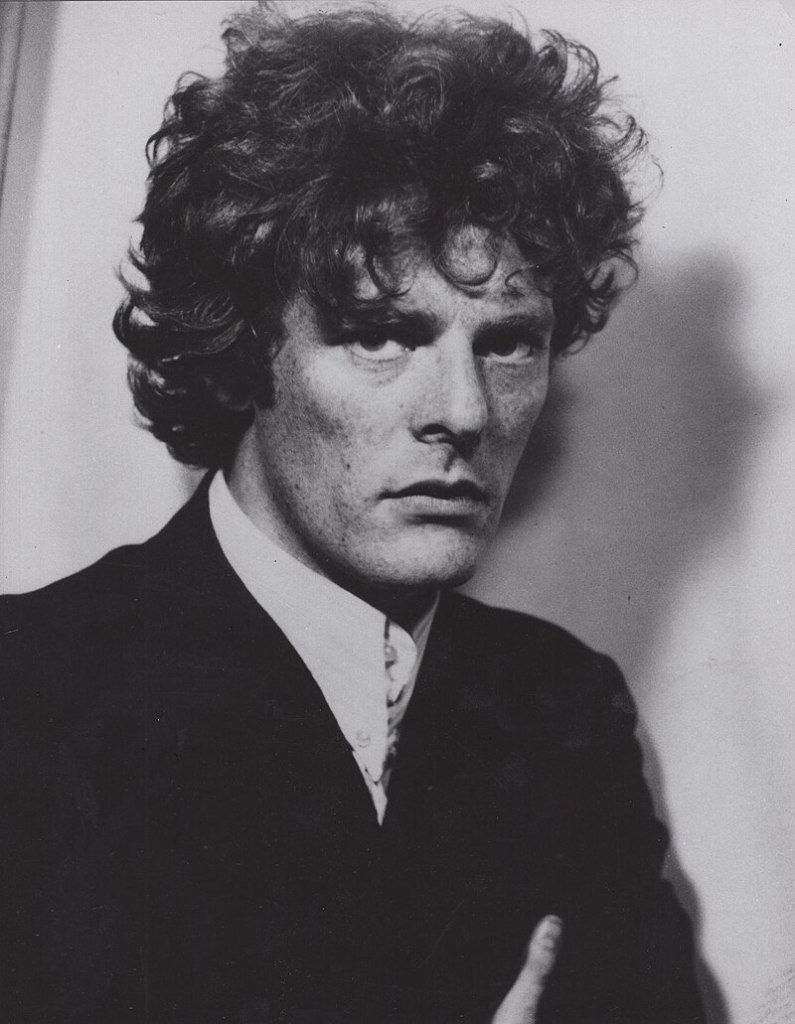
Paul Morrissey (1938-2024) passed away a few days ago; I decided to hold his tribute for today (Halloween), as it seemed most appropriate for a man who had directed his own takes on Frankenstein, Dracula, and The Hound of the Baskervilles. In the unlikely event that you don’t recognize Morrissey’s name, it’s because in the old Hollywood tradition, his films bore the imprimatur of their producer, with the director settling for something like anonymity. The producer of his films was Andy Warhol.
They were strange bedfellows. Morrissey was a Fordham grad, a conservative Catholic, and an army reservist. But Morrissey was already deep in the underground film scene when he hooked up with Andy, with neorealistic camp offerings like Mary Martin Does It (1962), Taylor Mead Dances (1963), and The Origin of Captain America (1964). He shared with Warhol an aesthetic of privileging performers, who were often non-actors, and by not intruding his own directorial vision on the proceedings. Both were interested in the camera as a recording device. In these collaborations, the film-maker’s supreme function was in the art of casting, and a stock company of intense characters were assembled: drag queens, gay street hustlers, elderly eccentrics, drug addicts.
Morrissey began collaborating at the Factory in 1965. His early films with Warhol were often scripted byRonald Tavel and starred the likes of Mario Montez, Mary Woronov, Jack Smith, Ondine, and Gerard Malanga, who had brought Morrissey into the fold. These movies included Paul Swan (1965), More Milk Yvette (1966, a take on Lana Turner/Jonny Stompanato drama), Hedy (1966, with Montez as the faded star), and Warhol’s first cinematic “hit” Chelsea Girls (1966), with Nico, Brigid Berlin, Ondine, Ingrid Superstar, International Velvet, and my old boss at the Alliance for the Arts, Randy Bourscheidt.
Next came The Velvet Underground and Nico: A Symphony of Sound (1966), an invaluable record of the early phase of that band. Morrissey also co-conceived, managed and named The Exploding Plastic Inevitable, the touring roadshow starring The Velvet Underground and Nico that toured the country from 1966 to 1967, and proved extremely influential. Those psychedelic projections and light shows that folks tend to associate with the San Francisco rock scene in the late ’60s (see yesterday’s post) actually originated with the Exploding Plastic Inevitable. Prior to their engagement at the Fillmore, it had not been an element of shows on the west coast. (And doesn’t it make sense that visual artists and film-makers would have come up with this?)
Valerie Solonas appeared in a couple of the Warhol/Morrissey films of 1967. After she shot Andy in 1968, Morrissey was given a much freer hand in the creation of the films, with Warhol’s name attached as a mere formality. It was Morrissey who brought in Joe Dallesandro, whose many hustler characters surely influenced Midnight Cowboy (1969), and new trans stars like Holly Woodlawn, Jackie Curtis, and Candy Darling. The films of this period include Flesh (1968), Trash (1970), I Miss Sonja Henie(1971), Women in Revolt (1971), and Heat (1972). These films were screened at art houses around the country, where they influenced the likes of John Waters and his Dreamlanders, and young Lance Loud.
Morrissey was also in charge of publicity for the Factory from 1965 through 1973, and co-founded Interview magazine with Warhol and others, in 1969. In 1971, he and Warhol purchased a 23 acre estate on the Montauk shore they called Eothen. Morrissey hung on to the place for nearly 20 years after Warhol’s death.

In 1973, Morrissey and Dallasandro went to Rome to make the movies I’d always known as Andy Warhol’s Frankenstein (1973) and Andy Warhol’s Dracula (1974), although their official titles now appear to be Flesh for Frankenstein and Blood for Dracula. Due to nudity, scenes of incest, and other elements, these films were X rated in their day. I hadn’t seen them until recently, and was surprised to discover that they were rather unlike the earlier Warhol films. There is much more narrative discipline to them. They do not look like homemade art films, but professional productions, rather like Hammer horror films of the day. And the casts consisted of legit European stars of the time. They make perfect Halloween viewing (if you don’t mind the kinky sexual elements), which is why I held this post for today!
In 1978, Morrissey released his most (theoretically) mainstream film, his comical version of The Hound of the Baskervilles, with the unbelievable all-star cast of Peter Cook and Dudley Moore,Denholm Elliott, Hugh Griffith, Terry-Thomas,Kenneth Williams, Roy Kinnear, Prunella Scales, Joan Greenwood, Spike Milligan, and several others. With a cast like this, expectations were high, but the film was universally panned at the time, and is almost never screened to this day.
Morrissey’s remaining films included Madame Wang’s (1981), the German production Beethoven’s Nephew (1985), and three with playwright Alan Bowne: Forty Deuce (1982) with Orson Bean and Kevin Bacon; Mixed Blood (1985) which features the screen debut of John Leguizamo; and Spike of Bensonhurst (1988). In 2005 he made a documentary about the life of the European supermodel Veruschka. His last film was News from Nowhere (2010).
After their split, Morrissey was known for badmouthing Warhol, belittling the contributions of the senior partner as essentially nil. But you could argue (and I do) that laissez-faire is the essence of minimalism, and further, that Warhol’s fame and personality are what drew people to the projects. In Morrissey’s favor — once he arrived on the scene, there were fewer eight hour films of the Empire State Building.

Comments