


R.I.P. Quincy Jones


Quincy Jones (1933-2024) would have been 92 today; he passed away with much accompanying fanfare back in November. I saved this appreciation for today so it wouldn’t get lost in the flurry of tributes. Most of the obits understandably focused on a handful of core accomplishments. I want to try to do a better job of conveying the totality, for it is hard to believe one man did it all himself. Jones was first a musician; a side man as well as a recording artist in his own right; a live performer; an arranger and producer of some of the greatest musical stars of our times; and he worked in movies and television, conquering those media as well. He worked within a bewildering number of musical styles, starting out in jazz, then adding pop, soul, funk, orchestral music, and much else. Many of his own compositions bridged genres.
You can get a sense of the breadth of Jones’ interests by a quick glimpse at some of the projects he contributed to that I’ve already written about. Two numbers in particular I could rave for days about are “The Streetbeater”, a.k.a. “The Theme to Sanford and Son” (1972), and his arrangement and production of The Brothers Johnson’s 1977 hit “Strawberry Letter 23”. He was one of the arrangers on Ringo Starr’s 1970 Sentimental Journey album; and he brought Michael Jackson’s career into the stratosphere by producing his biggest albums. These are almost at random though. There are another hundred accomplishments like these, we’ll mention as many as we can without turning it into a mere list.
Jones spent his early childhood in Chicago, his teen years in Seattle, where he took up the trumpet and became a major player in the local music scene. He studied at Berklee in Boston on a scholarship. In the mid ’50s he toured the U.S. and Europe with the bands of Lionel Hampton and Dizzy Gillespie and played in Tommy and Jimmy Dorsey’s house band on CBS Stage Show. He began recording and releasing his own albums in 1955, at the rate of roughly one or more a year through 1981. He also formed his own band to tour with a production of Harold Arlen’s ambitious blues opera Free and Easy from 1959 to 1960.
As a jazz and jazz/pop arranger and producer, Jones worked with the biggest names: the Count Basie Orchestra, Gene Krupa, Ray Charles, Frank Sinatra, Sammy Davis Jr,Sarah Vaughan, Dinah Washington, Betty Carter, Billy Eckstine, Ella Fitzgerald, Louis Armstrong, Tony Bennett.

Jones’ 1962 LP Big Band Bossa Nova (1962), featured the hip track “Soul Bossa Nova”, which became the theme to Austin Powers 35 years later.
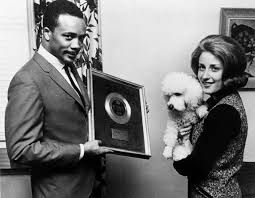
In the early ’60s, Jones first worked with stars of the rock and roll generation, producing Little Richard’s LP The King of the Gospel Singers (1962) and several Lesley Gore records including the major hits “It’s My Party” (#1, 1963), Judy’s Turn to Cry” (#5, 1963), “She’s a Fool” (#5, 1963), “You Don’t Own Me” (#2, 1964), “That’s the Way Boys Are” (#12, 1964), and “Sunshine, Lollipops And Rainbows” (#13, 1965).

In 1964 Jones released his album Quincy Jones Explores the Music of Henry Mancini and one wonders if this is what led to his being hired to compose movie soundtracks. Sidney Lumet’s The Pawnbroker (1965) was his first. In the Heat of the Night (1967), with its gospel flavored Ray Charles theme song and its Grammy nomination, was his most significant. Others included Mirage(1965), Walk Don’t Run (1966, Cary Grant’s last movie), Enter Laughing (1967, Carl Reiner’s first movie),In Cold Blood (1967), The Split (1968), MacKenna’s Gold (1969), The Italian Job (1969), Bob & Carol & Ted & Alice (1969), John and Mary (1969), Cactus Flower (1969), The Out of Towners (1970), The Anderson Tapes (1971), The Hot Rock (1972), The New Centurions (1972), The Getaway (1972), and about a dozen others. You’ll note that he was not boxed in to movies with black themes. He went there occasionally, but I feel like he was mostly associated with stylish caper and heist films. In fact, he was instrumental (pun intended) in transforming our expectations for what the music for that kind of movie would sound like.
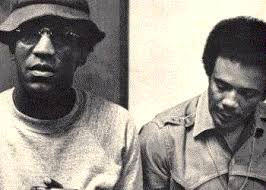
At the same time, it was natural for him to expand into television. His theme music for Garry Marshall’s first sitcom Hey Landlord (1966) is pretty non-descript, but the one he contrived for Ironside the following year is one for the ages, with its disturbing siren-inspired motif and blaring horns. Quentin Tarantino memorably exhumed it for Kill Bill (2003-2004). From 1969 through 1972 he did a number of projects with Bill Cosby. He wrote the theme for the original The Bill Cosby Show (the one where he played a gym teacher, quite a different show from the family sit-com of the ’80s). Cosby also improvises on the song. Naturally he’s hilarious*, but so is Jones, who had the rare knack for creating bubbly, exciting music that could express personality. Jones also recorded several pieces for incidental music on Cosby’s show, in collaboration with Cosby, which was released as the album The Original Jam Sessions 1969 in 2004. He also did the music for Cosby’s 1971 TV special, and for his variety show The New Bill Cosby Show (1972-73). Meantime, there was his flippin’ amazing, harmonica and organ driven, jug-band sounding, percolatin’ theme to Sanford and Son. Another landmark tv project he contributed to was the tv mini-series Roots (1977), though he only composed the music for the first episode. But it’s another slice of history he participated in.

At the same time, Jones had continued to explore sounds embraced by young people. In 1965 he released the album Quincy’s Got a Brand New Bag which included contemporary James Brown hits. In the early ’70s he did some arrangements for Billy Preston’s first LP, produced Donny Hathaway’s soundtrack album to the film Come Back Charleston Blue, collaborated with Aretha Franklin on her LP Hey Now Hey (The Other Side of the Sky), and produced numerous hits for The Brothers Johnson, including the aforementioned “Strawberry Letter 23”.

In 1978 Jones produced the soundtrack album to The Wiz (1978), though most of them music was written by Charlie Smalls, with the notable exception of “A Brand New Day”, which was penned by Luther Vandross. This is what put him in contact with 20 year old Michael Jackson, prompting a collaboration that was arguably a high point in both of their careers, spawning the chart topping albums Off the Wall (1979), Thriller (1983), and Bad (1987), the countless hit singles that came from them, as well as the all-star charity single “We Are the World” (1985). Jones also produced the record E.T. The Extra-Terrestrial (1982) which features John Williams’ music from Steven Spielberg’s movie, and narration by Jackson. The relationship with Spielberg naturally led to his scoring the the 1985 movie The Color Purple (the first Spielberg movie not to be scored by Williams). Jones, Spielberg, and others co-produced the 2023 remake.

At the same time, like a mad plate spinner, Jones continued to keep a hand in the kind of musical he was originally known for, producing records like Lena Horne: The Lady and Her Music(1981). Frank Sinatra’sL.A. is My Lady (1984), and releasing Miles and Quincy Live at Montreux (1993), which proved to be Miles Davis’ last album. In 1999 he appeared in Disney’s Fantasia 2000, introducing the segment on George Gershwin’s Rhapsody in Blue.
Meanwhile in the 1990s he had expanded his vistas yet again, from music producer to movie and tv producer. You will find him credited as executive producer on the shows The Fresh Prince of Bel-Air, MadTV, In the House, Vibe and other shows, as well as the 1997 superhero movie Steel starring Shaquille O’Neal.
He appealed to a new generation on one of his last album’s Q’s Jook Joint (1995), on which he enlisted the talents of LL Cool J, Queen Latifah, Töne Löc, Heavy D, Brandy, R. Kelly, Gloria Estafan, Tamia, Bono, and many others. In 2005 he was one of the music composers for the 50 Cent movie Get Rich or Die Tryin’.
In 2001 he released Q: The Autobiography of Quincy Jones.
Jones had seven children with five women (three of whom he was married to). Peggy Lipton of The Mod Squad and Nastassja Kinski are the best known of his partners. His notable children include Kidada and Rashida Jones, and Quincy Jones III.
Quite a legacy, eh? This ain’t even a tenth of it!
*Yeah, I know Bill Cosby’s a serial rapist. No one knew that in 1969. Back then, as far as anyone knew, he was just hilarious.
For more on show business history,consult No Applause, Just Throw Money: The Book That Made Vaudeville Famous, and please stay tuned for the upcoming Electric Vaudeville: A Century of Radio and TV Variety.

Comments