


Pardon me, but how much violence do you take in your movie?

I once saw Sasha Baron Cohen doing an interview as his character Borat. You may or may not be familiar with this character, so in short he pretends to be a racist, sexist, insensitive dimwit from Kazakhstan who visits America to learn its culture. He mingles with real people, so as you can imagine, it gets both cringey and downright hilarious. In the interview he told the host with his thick, faux
Kazakhstani accent that the movie he made was initially under review by the censors. “They said that it had too much anti-semitism.” Then he says that after some reexamination editing the movie now has “just the right amount.”
Of course, his comment is meant to be satire, but it makes me think about violence in the movies and how to measure what is appropriate and what isn’t.
(1998), for example, is generally viewed as an almost wholesome movie, despite the horrors it depicts on screen. It portrays events and conveys ideals that we generally value. Other movies we may label as “gratuitous” because of the amount of graphic violence that doesn’t seem to have a purpose outside of upsetting the stomachs of its viewers. However, having a conversation with someone about yours and their standards on the subject, you can easily come away thinking the other is either too lax or a prude. Here are some of what I would deem “appropriate” depictions of violence in the movies:
Good vs Bad.
This is pretty simple and I’m sure we all understand it. We are shown violence to establish who is the protagonist and who is the antagonist. Bad guys use violence to do more bad things. Good guys only use it to defend. It’s weird though. So often in movies the bad guys have bad aim and have a tendency to spare the lives of the protagonists for some reason, like wanting to relish the moment or something. The good guys, on the other hand, always seem to have great aim and kill off bad guys like they’re unwanted vermin.

Impact on victims.
Denis Villeneuve himself has stated that he hates violence, and only uses it in movies to communicate the impact it has on those on the receiving end. A good example of this would be his 2010 middle eastern war film In it we see violence by militants, but the feeling you get while watching isn’t excitement, nor inspiration to copy such behaviour. Rather, it makes you feel something. Something that is very good for us to feel. Like you benefit from the empathy and moral imagination you’re faced with.
Making a statement. *
SPOILER ALERT* If you haven’t seen (2009) and would like to, skip this one. In this movie you see Nazis being hunted and brutalized. We’re presented with an alternate universe where someone riddles Hitler’s body with so many bullets he turns into an unrecognizable pulp. It would be short sighted to dismiss this as Tarintino being a fan of revenge, brutality, and wanting to be extreme for extreme’s sake. Instead, we should note the intended duplicity displayed in this movie. We are seeing a plot to violently kill a theatre filled with Nazis who are in there watching a movie about violently killing Jews. He makes you face that weird, paradoxical relationship with violence. You can’t miss the conflicted feelings inside yourself when seeing Hitler get “what’s coming to him.” Maybe Tarantino isn’t a lover of violence. Maybe he’s just a good teacher.
A look in the mirror.
Sometimes writers and directors show us who we are, and it’s not always easy to watch. (2013), (2017), (2016), and (2004) are examples of movies that force us to face the violence that are directly connected to us in one way or another. They often spark good, healthy conversation, though sadly often won’t. None of us like looking in the mirror when we don’t like what we see.
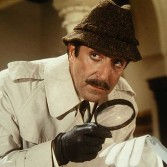
Comedy.
Ok, this is the only one I don’t completely defend. I love seeing slapstick comedy like (2012), (1988), and (1963). I’m not sure where to really draw the line, but I do know that sometimes a depiction of someone getting smoked by a shovel can make me laugh like a fool.
I’m sure there are other noble uses of violence on the big screen, but I’ve droned on too long. And I can’t think of anything else. My brain hurts. So for now, let’s just appreciate Denis Villeneuve, his movies, and especially the one that is our movie of the week:
Congratulations This is your week.
Best Actress:
Amy Adams as Louise Banks in I agree with you Melissa. She is such a great actress.
Best Actor: Harrison Ford as Rick Decker in
Best Quote: “You’re asking me how a watch works. For now we’ll just keep an eye on the time.” — Benicio Del Toro as Alejandro in
My top 5 Denis Villeneuve Movies:
Sicario (2015)
Blade Runner 2049 (2017)
Prisoners (2013)
Arrival (2016)
Incendies (2010)

Comments