


On Keaton’s Sound Shorts (1934-41)


90 years ago today (March 16, 1934) saw the release of The Gold Ghost, the first of Buster Keaton’s sixteen short subject comedies for Educational Pictures.
The years of Keaton’s talkie shorts have come to be his most neglected screen period, for a variety of reasons. Keaton apparently regarded them as an embarrassment, and most historians have written off this part of his career. For a long time the films were unavailable, so most relied on Keaton’s word, Educational’s Poverty Row reputation and the poor quality of his later Columbia shorts to come to the conclusion that the Educational period is not worth talking about. Happily it’s not the case. Ironically, these little movies are vastly more enjoyable than his far bigger-budgeted MGM features. Most of them are funnier, more clever and truer to his character, even if they do have to rely on shabby sets and amateur supporting actors. Keaton had a good deal of freedom and one gets a tantalizing sense of what might have been possible with some serious studio resources behind him.
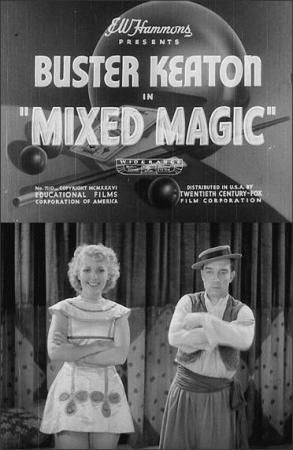
Many of the “poor cinema” locations and settings in the Educationals suit Keaton’s rough-hewn rural persona, and point the way for what could have been a promising direction for his comedy to take as he grew older. Palooka from Paducah (1935) and Love Nest on Wheels (1937) are both hillbilly comedies starring the entire Keaton family (Buster, Joe, Myra and sister Louise). The Gold Ghost (1934) and One Run Elmer (1935) both have desert ghost town locations, and Hayseed Romance (1935) is set in a farmhouse. And unlike his MGM films, the comedian has plenty of freedom to explore new slapstick ideas, even if the small budgets limited his ability to bring the ideas to perfection. Allez Oop (1934), for example, has Buster’s ne’er-do-well watch repairman trying to teach himself to be a trapeze artist in order to win the heart of his girl. This creates opportunity for many backyard pratfalls (as well as spectacular heroism at the film’s climax).

The best of all his Educational’s was Grand Slam Opera (1935) which is so good one wonders if it wasn’t devised by Keaton as an intentional showcase to remind the world how damn good he was capable of being. The premise is that he’s trying out for a Major Bowes type amateur talent show on radio. We get to see him juggle, do balancing, sing, do a soft shoe, perform folk dancing in several national styles, and of course lots of hilarious slapstick. The excellence of it makes you sigh for what might have been.

In 1937, Educational lost its distributor 20th Century Fox and was out of the short subject business. Two years later, Keaton went over to Columbia. Though the Columbia shorts generally look better in terms of art direction and cinematography, the bulk of these films, directed by Jules White (whom we’ll return to) are bona fide stinkaroos. It’s really hard to say who’s at fault. As at MGM, Keaton is just wrong for the house style. Unhappy about it, he phones it in. Many other comedians managed to star in identically scripted and shot shorts for Columbia and be quite hilarious, The Three Stooges being the prime example.
Judging by his performances Keaton’s heart clearly wasn’t in it. My favorite of the bunch is probably So You Won’t Squawk (1941) which is full of inventive, funny gags. Cast as a handy man at a night club, Buster falls off the top of a ladder, gets his foot caught and hangs upside down. He also rides the ladder down to the ground as it does a split. He falls out a window, hanging by telephone wire off a skyscraper. It definitely looks like he takes a two story fall through an awning. And at the climax he gets police to chase him by stealing a squad car and throwing tomatoes at every cop he passes – the ensuing chase recalls Cops. After his last Columbia short She’s Oil Mine, Keaton declined to renew his contract declaring that was his last “crummy two-reeler”.
And then…like the heroes in his movies, the old clown fought seemingly unbeatable odds, and made his famous comeback a few years later. But all serious fans of classic comedy need to investigate these little films from Buster’s “awkward period”. You will be rewarded with many happy surprises.
For more on silent and slapstick comedy films, including those of the great Buster Keaton, please check out my book: Chain of Fools: Silent Comedy and Its Legacies from Nickelodeons to Youtube, from which this article was exerpted and adapted.

Comments