


Much Ado About Mike Myers

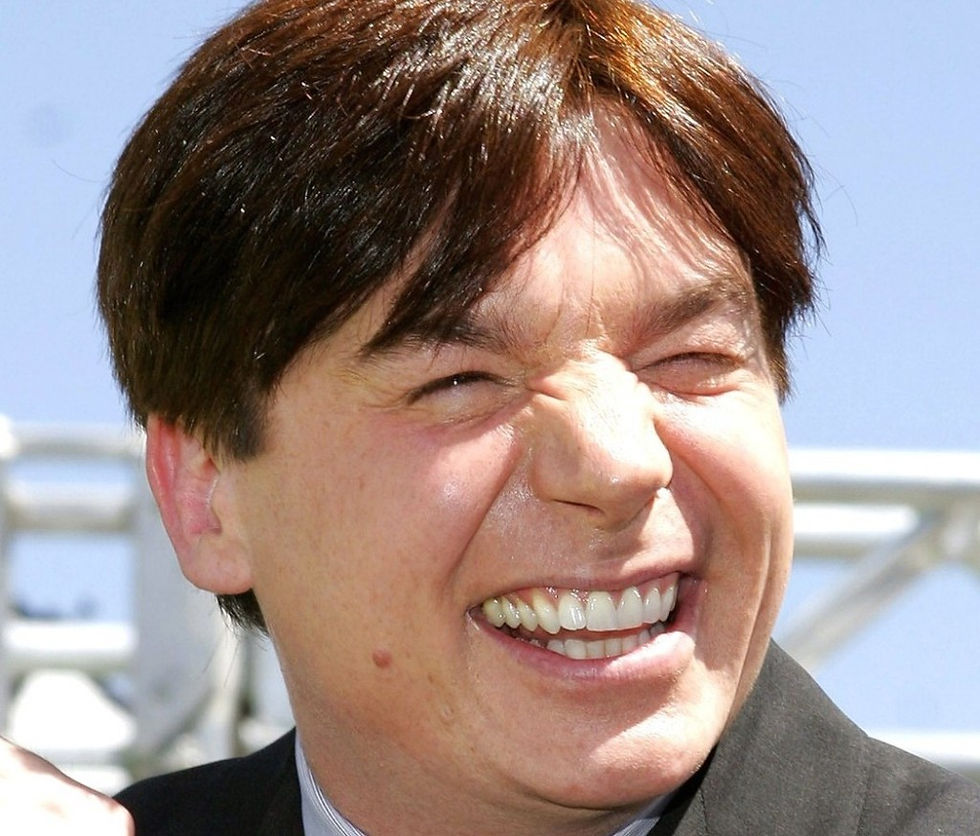
Today we celebrate a comedian so great that he has transcended having the same name as the psycho killer from Halloween.
To date, there have been well over 150 regular cast members on Saturday Night Live; by most measures Mike Myers (b. 1963) surely ranks somewhere in the top ten in terms of career success. The point is debatable, and I don’t do debates, but I think of him as the one who achieved the greatest success doing the “SNL thing”, i.e. creating popular characters and catchphrases that become weekly features on the show, and then expanding those and similar high concept premises into movie franchises. But doing that almost exclusively. There are some like Dan Aykroyd, Eddie Murphy, Adam Sandler, and Tina Fey who may have earned more money at the box office, or from other deals, but these have all expanded well beyond making movies based on sketch premises. Almost all of Myers’ movies are profitable gimmicks. He’s deviated from that m.o. only a handful of times.
Myers is British/Canadian through and through. His parents were immigrants from Liverpool who settled in the Toronto area. (It’s curious to me that he doesn’t do a Liverpudlian as one of his main characters. Seem like easy pickin’s but maybe it’s too close to home. Or Maybe it’s because his cohort Dana Carvey beat him to the punch with his Beatles impressions). Myers started out as a professional child actor. Gilda Radner once played his mom in a tv commercial! He naturally got his start at Second City Toronto. He also spent some time in the U.K., working at the London outpost of the Comedy Store. Many of Myers’ key characters were first developed in those two playpens. His high school kid character Wayne from “Wayne’s World” was first spawned for Canadian rock shows in the MTV mold.

Myers’ stint on SNL lasted for six years, 1989-1995. The cast when he came aboard included Carvey, Nora Dunn, Phil Hartman, Jan Hooks, Victoria Jackson, Jon Lovitz, Dennis Miller, and Kevin Nealon. When he left Hartman and Nealon were still there, now joined by Ellen Cleghorne,Chris Farley, Melanie Hutsell, Michael McKean, Tim Meadows,Adam Sandler, Rob Schneider, David Spade, and Julia Sweeney.

Unlike many or most SNL cast members he is not known for doing celebrity impressions. He dreams up his own funny characters, often from life. On the show, they included Wayne Campbell, the high school kid with his own public access show “Wayne’s World”; Dieter the pretentious host of a West German arts show called Sprockets (back when Berlin techno culture was influential on New Wave); Linda Richman, a Jewish female character based on his mother-in-law who hosted a show called Coffee Talk; and Simon, a little British boy taking a bath. He also played several exuberant Scottish characters. And some of his ethnic characterizations, such as a Japanese game show host, don’t fly well today.

Myers made the transition to films pretty quickly, and it was at a time when few cast members rated doing that. The great Penelope Spheeris directed the movie version of Wayne’s World in 1992, followed by a sequel in 1993. Then out of the blue like a bolt of thunder he cooked up the Austin Powers franchise, a trio of movies released from 1997 to 2002. To my mind, the first in the series Austin Powers: International Man of Mystery, was Myers greatest comic achievement, very much of the caliber of the parodies of Mel Brooks. It’s a send-up of James Bond mixed with the mod energy of London’s rock and fashion worlds of the 1960s. (People often mention the spy stuff, without the latter half. James Bond doesn’t dance, have long hair, dress like a Carnaby Street dandy, and such like). Directed by Jay Roach, these movies were a huge pop culture phenomenon, not just big big box office, but a generator of catch phrases, and merch (toys, dolls, Halloween costumes etc). The two sequels were not nearly as good as the first one, but they were huge moneymakers as well.

In the midst of this, Myers agreed to be the voice of the animated character of Shrek (2001-present), a role originally intended for the late Chris Farley. (That makes sense when you hear it, right? Shrek even looks like Farley). Myers plays Shrek with his stock Scottish accent, so in a way, this character too is a variation on material he has been doing for years. The Shrek series too has been a massive moneymaker. At this writing there is a Shrek 5 slated for next year (2026).

Wayne’s World, Austin Powers, and Shrek are Myers’ big three comedy franchises. Most comedians would kill for just one. And to prove that it’s not as easy as Myers made it look, he went and had failures with three other attempts at it. In 2000, Myers’ next project in the pipeline was to have been a Dieter movie. He ran into trouble with the screenplay however (he writes his own screenplays), and he pulled back from the contractual timeline, prompting a lawsuit from Universal. The issue was settled by Myers agreeing to play the title character in a live action version of The Cat in the Hat (2003). The movie broke even, but, man, is the make-up disturbing in that movie. It’s more unsettling than funny or loveable. There was no demand for sequels.
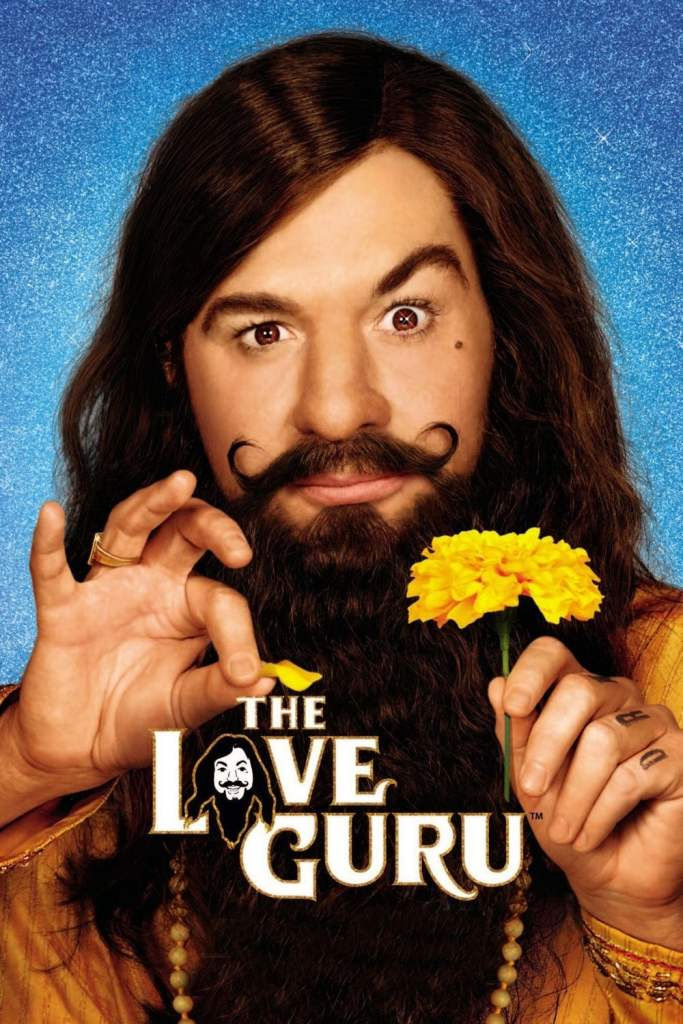
Myers’ last bite at a new apple was the notorious The Love Guru (2008), which was simultaneously not funny, a mess, and offensive to South Asian people. It’s fairly unfathomable. The premise of choosing a spiritual self-help guru as a comic target is fine, but he doesn’t really do much of that at all, in any kind of sustained way. He mostly seems to just be making fun of Asian culture. And then it turns into a hockey comedy, which the world already has enough of those, including Mystery, Alaska (1999), which Myers is also in. The movie is so bad that it rates 13% on Rotten Tomatoes, and lost a lot of money at the box office, a big no-no. Since then, as a star, he has only done sequels.
There are some other interesting odds and ends in his career. Early in his career he was tried, unsuccessfully, as a conventional comic leading man in So I Married an Axe Murder (1993). He also played a straight part, Steve Rubell, the real-life owner of Studio 54 in 54 (1998). Audiences seem to prefer him in big comic characters. I loved him in supporting parts as a British general in Inglorious Basterds (2009), a weaselly record exec in Bohemian Rhapsody (2018), and a spy/ophthalmologist in Amsterdam (2022). Thank you Alan Brown for reminding me that from 2017 to 2018 for a gag he went in disguise (uncredited) as a British emcee named Tommy Maitland on a reboot of The Gong Show! I have yet to see his Netflix series The Pentaverate (2022), but will report back when I do. (Word of mouth has not been good, sadly). He also tried his hand at directing with the documentary Supermensch: The Legend of Shep Gordon (2013).
Of late, Myers had made triumphant returns as a guest on SNL, and has been praised as a champion of Canadian patriotism, pushing back on Trump’s attacks on the country with on-air messages. He received the Order of Canada in 2017.
For more about show business historyconsult No Applause, Just Throw Money: The Book That Made Vaudeville Famous, And please stay tuned for my upcomingElectric Vaudeville: A Century of Radio and TV Variety.

Comments