


La Carpa, the Mexican Vaudeville

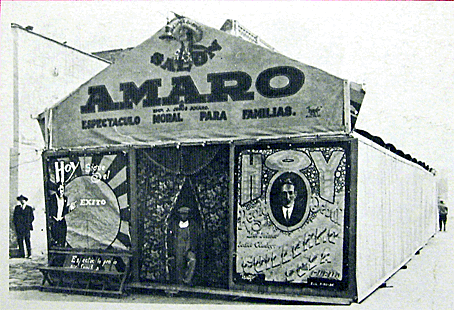
Today being the holiday of Cinco de Mayo we thought we would celebrate a particular manifestation of Mexican culture, one that overlaps with the customary themes of this blog in a more obvious way, the Carpa, or Mexican tent show.
Carpa means “tent” in Spanish, and readers of this blog know that America has long been home to all manner of traveling tent shows, particularly during the 19th and earth 20th centuries. Black vaudeville, medicine shows,circuses, religious revivals, and the peculiar midwestern phenomenon known as the Toby Show are all examples. The Carpa sprang up in the years following the Mexican Revolution (ca. 1910-1920), reaching a peak during the 1920s and 1930s, and lasting into the 1940s. Its precursor was a tradition of presenting plays in the religious season between the Day of the Dead (November 1) and Christmas beginning in the 1870s.
The carpa promised family entertainment and usually featured clowns (often portraying certain stock characters, not unlike commedia), acrobats, magic, puppets, music, dance, and in later years, movies. They presented their shows all over Mexico, but also in the American Southwest. Famous shows included Carpa Valentina (a Russian circus family which had fled the Russian revolution and Civil War), Carpa Garcia (a large family concern whose territory included California, Arizona, New Mexico and Texas), Carpa Azcapotzalco, Carpa Cubana, and Carpa Monsavias.
For much more on the carpa, this article provides much excellent flavor and detail.
To find out more about the history of vaudeville, consult No Applause, Just Throw Money: The Book That Made Vaudeville Famous, available at Amazon, Barnes and Noble, and wherever books are sold.

Comments