


Ken Ogata in Mishima: A Life in Four Chapters (1985)

Ken Ogata as Yukio Mishima (Mishima: A Life in Four Chapters, 1985)
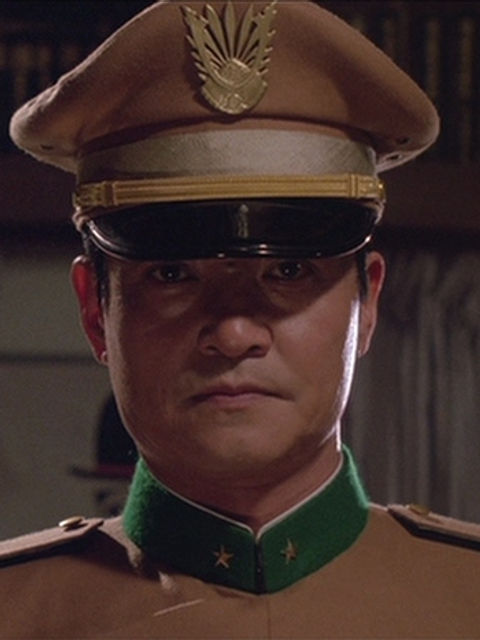
In Paul Schrader’s mesmerizing portrait of the enigmatic Japanese author Yukio Mishima, Ken Ogata delivers a performance of remarkable subtlety and devastating power. Throughout the film, Ogata inhabits the author’s skin with an understanding that creates a living embodiment of Mishima’s contradictions, passions and, ultimately, his tragedy.
The genius of Ogata’s portrayal lies in how he captures Mishima’s public persona while simultaneously revealing the fissures beneath the surface. In the scenes depicting Mishima’s later years, Ogata carries himself with a military preciseness that never feels affected or theatrical, but rather like the natural evolution of a man who has carefully constructed his own mythology. There’s a magnetism to his presence that makes entirely believable Mishima’s ability to attract devoted followers, yet Ogata layers this charisma with hints of something more desperate and searching- not insanity per se, but more self-created philosophical destiny.
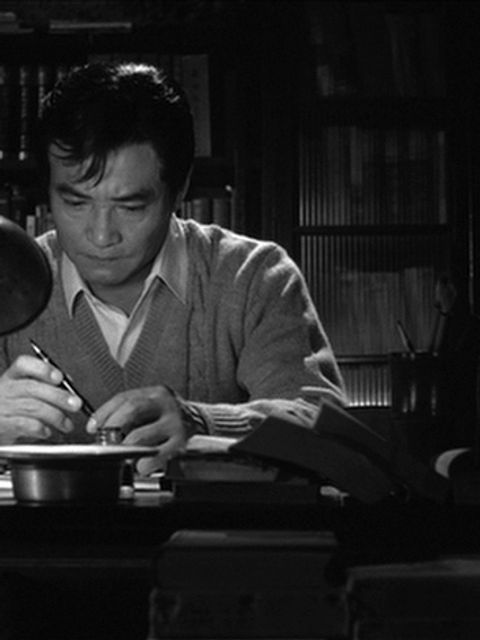
What’s particularly masterful is how Ogata conveys Mishima’s intellectual brilliance without ever making it seem performative. Whether delivering lectures or engaging in conversation, there’s an ease to his erudition that suggests a mind constantly at work, yet also constantly at war with itself. His Mishima doesn’t merely speak his philosophies; he appears to be actively working through them in real-time, testing their boundaries against the limitations of reality- this is especially evident in the narrattion. This creates a fascinating tension between the character’s absolute certainty in his beliefs and the subtle suggestions of doubt that Ogata allows to surface in quiet moments.
The film’s biographical sequences, shot in stark black and white, showcase Ogata’s ability to trace Mishima’s evolution from successful author to cultural icon to revolutionary figure. His Mishima is both the detached artist and the man desperate to transcend the boundaries between art and action. Ogata’s characterization is an evolution of an intellectual into a fully formed artist, whose appreciation for both “pen” and “sword” merge into a revolutionary powder keg.

Where Ogata truly excels is in portraying Mishima’s fundamental displacement from the world around him. Even in moments of triumph or connection, there’s always something slightly removed in his performance. This alienation is never overplayed but remains constant, like a low electrical hum beneath the surface of every scene. It’s this quality that makes the character’s eventual actions feel not just understandable, but almost inevitable.
The film systematically builds to its conclusion, and here Ogata delivers some truly powerful work in portraying fanaticism and self-destruction. In the sequence where Mishima addresses the soldiers at the military headquarters, Ogata achieves something remarkable- he shows us a man both absolutely convinced of his actions and simultaneously aware of their futility as his words go ignored. The famous balcony speech scene is delivered with such burning intensity that it becomes almost uncomfortable to watch, yet Ogata maintains enough control to let us see the despair beginning to creep in around the edges.

These final scenes are where Ogata’s character work fully pays off in devastating fashion. As reality crashes against Mishima’s carefully constructed ideals, Ogata shows us a man facing external and philosophical defeat. The genius of the performance is that he makes us feel the weight of this collapse without ever breaking Mishima’s exterior composure. It’s all in the eyes, in slight changes of posture and those intense eyes.
Most remarkably, Ogata manages to maintain Mishima’s dignity even as events spiral toward their inevitable conclusion. His portrayal never judges the character, never reduces him to either madman or martyr. Instead, he shows us something more complex- a man who has pursued his convictions to their logical endpoint, regardless of the cost. The resignation with which he faces his chosen fate is both beautiful and horrifying, a perfect encapsulation of the contradictions that defined Mishima’s life and work.
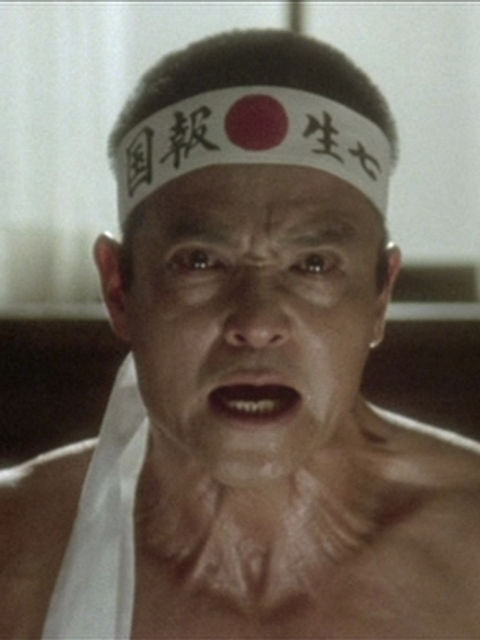
In the end, what makes Ogata’s performance so remarkable is how it bridges the gap between Mishima the public figure and Mishima the private man, between his artistic endeavors and his political actions, between his strength and his vulnerability. It’s a portrayal that helps us understand, if not necessarily condone, the choices that led to that fatal day. Through Ogata’s work, we see Mishima not as a puzzle to be solved but as a human being whose complexities and contradictions were both his genius and his undoing.
The Best Acting Moment: speech for the garrison
Verdict: 5
Leave a comment Cancel reply
Δdocument.getElementById( "ak_js_12" ).setAttribute( "value", ( new Date() ).getTime() );

Comments