


Justice League

Directed By: Zack SnyderWritten By: Chris Terrio and Joss Whedon (based on the Justice League comics conceived by Gardner Fox) Starring: Ben Affleck, Henry Cavill, Gal Gadot, Ezra Miller, Jason Momoa, Ray Fisher
Justice League smacks of untappe
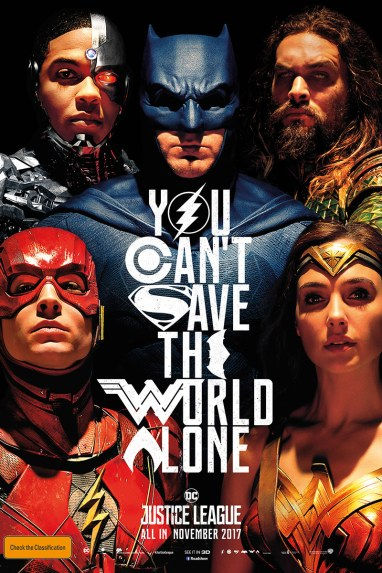
d potential, which is both its curse and flickering upside. It’s a great frustration that on one hand the movie can’t help but subject itself to the most cliched pit-traps of its genre— unfocussed storytelling, bouts of CGI laden cacophony (to both ear and eye), shallow characterisations, all symptoms of the film’s excessive breathlessness.
It’s a great disappointment too, given the film was surely conceived as DC’s crown jewel. Finally DC’s most cherished creations would share a live-action screen: Batman, Superman, Wonder Woman, The Flash, Aquaman, Cyborg. To see these characters at long last lassoed together should provide a sure-fire sentimental thrill, even for those indifferent to the comics, such is their stature in popular culture. To see their varying personalities clash could provide a more sophisticated thrill—how intriguing to see Bruce Wayne confront his distinctly human mortality in a world of God-like figures; to see Bruce’s brooding, pragmatic perspective of the world conflict with the wide-eyed optimism of Diana Prince; to see the League attempt to reconcile the varying moral complications inherent in resurrecting a fallen comrade (that’s no spoiler, Superman’s Henry Cavill takes second billing in the opening credits, a Kingsman-esque character backtrack which does the story’s prospective stakes no favours.) All this amidst 300-million-dollars-worth of spectacular action—it’s easy to picture the eyes of Warner Bros. execs bulging at the notion of a homegrown blockbuster to finally usurp The Avengers as the preeminent superhero ensemble.
Sadly, Justice League isn’t that film, but it’s not all doom and gloom. On the other side of the coin is a film evidently conscious of the intriguing dynamics and capacity for good-old-fashioned escapist fun that lay at its fingertips. Where the franchise’s prior ensemble features, BvS and Suicide Squad, slapped viewer’s in the face early and often with their overwrought portent and woefully directionless narrative respectively, Justice League preserves a kernel of hope, the distilled essence of the film it might have been, had its vision been clearer.
That may sound like a back-handed compliment; admittedly, it’s hardly one for the poster—The critics rave: “at least it had SOME potential”— but in the context of this fledgling cinematic universe, to bear traces of the action-adventure we hope to soon see is a substantial step forward.
What of the film before us now though? The answer: an occasionally exciting, but frequently clumsy spectacle that too quickly suffocates its characters with too many set-pieces and too much exposition.
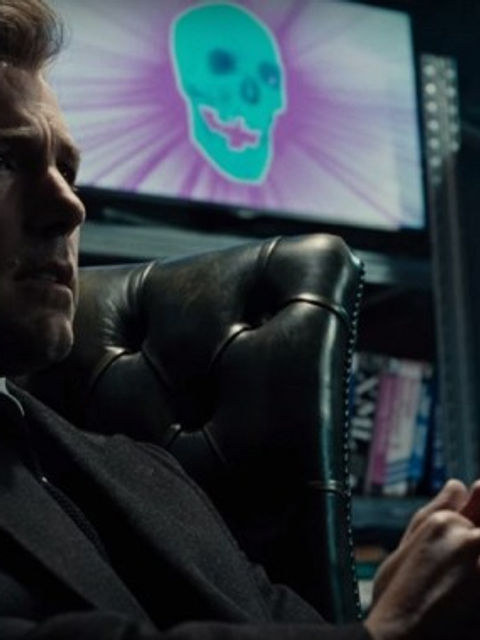
The plot sees billionaire Bruce Wayne (Ben Affleck, undeservedly criticised), amidst the world’s mourning of Superman, embark on a quest to recruit the planet’s remaining metahumans, less us Earthlings once again find ourselves under alien siege. We know Wonder Woman (Gal Gadot, effortlessly charming), is in. But we are yet to meet the remainder of the team. First is Arthur Curry, A.K.A Aquaman (Jason Momoa), the tattooed, musclebound, trident wielding heir to the throne of Atlantis capable of communicating with the sea; Barry Allen, A.K.A the Flash (Ezra Miller), the incessantly zany, firecracker youngster with the power of superspeed; and Victor Stone, A.K.A Cyborg (Ray Fisher) a reluctant hero who was left part man, part robot after he was cybernetically reconstructed by his father, saving him from injuries sustained in a car crash.
Chris Terrio and Joss Whedon’s screenplay opts to condense the origins of these three fresh faces to a fleeting handful of scenes each, presumably in a bid to essentialise the script and bypass tiresome introductory formalities. It’s an interesting proposition, and, save for the lesser known Cyborg, not an entirely audacious one, considering each character is preceded by their reputation. The dramatic power of ingratiating an audience with a character, to their motivations and outlook however, isn’t to be overlooked.
The upshot of the streamlined approach is a blockbuster appreciably light on its feet, but one which obliges itself to paint each new addition with a single broad stroke. Aquaman is a too-cool-for-school Rockstar; The Flash is pure comic relief (no doubt Joss Whedon’s answer to the franchise’s observed absence of levity); Cyborg just needs to chill out. The less said about the hopelessly bland, CG rendered supervillain Steppenwolf, awoken by Superman’s demise and who now wants to destroy the world for destruction’s sake, the better.

The film as a whole needs to chill out too; to slow its pace and let the ostensibly interesting personalities flourish. Whilst the portent of the tone has been alleviated, the narrative remains stressed in its incessant pinging from exposition, to cobbled backstory, to boisterous action. “Stay still!” I wanted to scream. Had these characters been permitted the time to merely be themselves, to breathe and demonstrate the finer grains of their personality, we might have truly fallen for them. That was certainly true of Patty Jenkins’ Wonder Woman, a film which displayed great elegance and patience in bringing us close to its protagonist, culminating in the most humane of all comic-book films this year.
Indeed, the most arresting moments of Justice League are when the film, if only for a fleeting moment, lets personality take centre stage. Consider Bruce and Diana’s passing clash over whether Diana is too sensitive to be a true leader, or the lighter moments like when tough guy Aquaman is unknowingly coerced into spilling sentiments to the team via Wonder Woman’s lasso of truth.
For a time, Justice League does in fact flag the moral complications in reviving Superman, and Bruce Wayne’s value as the token mere mortal of the group is scrutinised, until the story unwittingly distracts itself with another bout of the two Ex-es: explosions and explanations.
One hesitates to criticise Justice League for its scattershot demeanour; the production was famously troubled beyond anyone’s control, with Zack Snyder forced to abandon directorial duties following a family tragedy, at which point Whedon stepped in. The irony is that the two styles, Snyder’s penchant for brooding action and Whedon’s penchant for interaction and humour, make for an intriguing dynamic, and signal progress for the series. Now all that’s needed is a focussed narrative to frame it all. Perhaps Justice League finalised that obvious lesson so that future instalments needn’t relearn it. Maybe Justice League is best thought of as a cinematic martyr, introducing the necessary pieces and merely flirting with greater intrigues, so that they can be more comprehensively explored next time– setting the table so we can enjoy the future meal. To invert a quote uttered by James Gordon in arguably the greatest of all DC movies, Justice League isn’t yet the film its fans deserve, but perhaps it is the one the series needs right now. I’m hoping it is.
Rating:
2.25/4

Comments