


How the Sausage Gets Made (Or at least, the tools you need to do it)

This week, I thought we’d take a look at something that relates to culinary history in a way that we haven’t talked about much before: food production and technology. More specifically, part of the process of how the literal sausage is made.


Our collection of culinary materials contains more than a few catalogs for companies whose products support the creation, growth, transportation, packing, and consumption of food! This one comes from McArthur, Wirth & Co., who, at least in the late 19th and early 20th centuries, manufactured butchering supplies. “What kind?” you may ask. A wide variety.


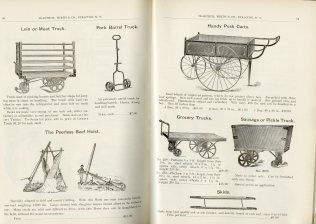
The process of butchering animals involves a lot of steps and as even a few pages from this catalog suggest, there are a range of tools, supplies, and parts. It’s interesting to see how the company markets their product. They include a cabbage cutter with meat cutters, suggesting a butcher who also sells sauerkraut might make additional money. Personally, I’m intrigued by the addition of the “banana knife” and how it fits into the same category of food processing as butchery (there may be some application I don’t know about?). And a catalog like this can give us insight into things like the technology of transportation. The last page above includes different kinds of trucks and transport devices on wheels, but also offers skids. Anyone who is acquainted with parts of upstate New York, including the Syracuse area, can tell you what those winters are like. In February 1900, for example, wheels would not be the best way to move product.
One of the last pages of the catalog is actual recipes for sausages and meat products. (See, I said we were going to learn about how it gets made–all the way to a finished product!) It’s pretty detailed, so don’t say I didn’t warn you if you read on…

We have catalogs from other butcher suppliers, as well as confectionery, dairy, farm, and bakery suppliers, just to name a few. We’ll look at some more in the future, since these tools place such an important role in how raw materials (animals, vegetables, and minerals) become the foods we know and love.

Comments