


How About Holmes Herbert?

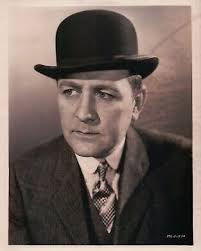
July 30 was the birthday of stage and screen actor Holmes Herbert (Horace Edward Jenner, 1882-1956), sometimes billed as Holmes E. Herbert, H.E. Herbert, H.J. Herbert, anything one hopes, except H.H. Holmes — though that might have been an appropriate moniker given his track record in horror and mystery films.
Herbert was the son of British actor and music hall comedian Ned Herbert (Edward Henry Jenner). He had worked in the circus in his youth, and gotten some theatre experience before moving to the U.S. in 1912. He was 24 when he appeared on Broadway in Sir Arthur Wing Pinero’sThe “Mind the Paint” Girl with Billie Burke and Jeanne Eagels. The next year he was in The Younger Generation by J.M. Barrie. He then made two films for Thanhouser in 1915, His Wife and The Fisherwoman. He returned to Broadway for Just a Woman (1916) with Walter Hampden, and The Case of Lady Camber (1917) with Mary Boland.
Herbert’s screen career began in earnest in 1917. Throughout the balance of the silent era he was a leading man and second lead, starring in major studio productions such as The Man Without a Country (1917), Ibsen’s A Doll’s House (1918), The Divorcee (1919) opposite Ethel Barrymore, Dead Men Tell No Tales (1920), and dozens more through Gentlemen Prefer Blondes (1928), The Terror (1928), and The Charlatan (1929).
During the talkie era, Holmes’ British accent stood him in good stead in Hollywood. He was often cast as a Scotsman, though that wasn’t his native accent (he was from Nottinghamshire). In the early years he was often in second leads, and major ensemble and supporting parts; later he dropped down to the status of a bit player. One is tempted to class him among the likes of Lionel Atwill and George Zucco as a “horror/ mystery actor” so extensive where his credits in those kinds of movies. He’s in both the 1929 and 1937 versions of The Thirteenth Chair, the 1931 version of Dr. Jekyll and Mr. Hyde (1931), Mystery of the Wax Museum (1933), The Invisible Man (1933), Mark of the Vampire (1935), Tower of London (1939), The Ghost of Frankenstein (1942), Invisible Agent (1942), The Undying Monster (1943), Calling Dr. Death (1943), The Uninvited (1944), The Mummy’s Curse (1944), Ivy (1947), Mark of the Gorilla (1950), and Son of Dr. Jekyll (1951), along with a half dozen of the Basil Rathbone Sherlock Holmes pictures, and films in the Bulldog Drummond, Mr. Moto, and Charlie Chan series.
Yet, Herbert was in many classics of other genres as well, including The Count of Monte Cristo (1934), Captain Blood (1935), Wife vs. Secretary (1936), The Prince and the Pauper (1937), The Life of Emil Zola (1937), The Adventures of Robin Hood (1938), Kidnapped (1938), Marie Antoinette (1938), The Little Princess (1939), Jaurez (1939), The Private Lives of Elizabeth and Essex (1939), Foreign Correspondent (1940), Boom Town (1940), George White’s Scandals (1945), Sorry Wrong Number (1948), and David and Bathsheba (1951). His last picture, out of over 230, was The Brigand (1952).
Herbert was married thrice: to Elinor Kershaw, ex of Thomas Ince; to actress Beryl Mercer, and to Agnes Bartholomew, who passed away just a few months before he did.
For more on the history of show business,consult No Applause, Just Throw Money: The Book That Made Vaudeville Famous, for more on silent and early cinema please check out my book: Chain of Fools: Silent Comedy and Its Legacies from Nickelodeons to Youtube.

Comments