


Guest Post: Christmas Feasting in France

I love to travel and find it interesting how the same holiday is celebrated around the world. Leah Larkin from Tales and Travel shows us how Christmas is celebrated in France. Check it out and take a look at Tales and Travel while you are at it…
The French are obsessed with food – or so it seems. Restaurants, recipes, dinner menus – all are frequent topics of conversation. At this of year, the focus is on the most important feast of the year, the Christmas Eve dinner.
I moved to France eight years ago and have been invited to share this occasion at the home of French friends, and I’ve invited them for the meal at our home. The name of this dinner comes from the word (meaning “waking”) because participation involves staying awake until midnight and beyond. At friend Veronique’s one year, dinner was interrupted at midnight when Santa arrived and gifts were distributed. Then came dessert, with the party continuing until 3 a.m.

In Provence, southern France where I live, the Christmas Eve dinner is also known as the or big supper. According to tradition, the dinner table is covered with three white tablecloths to symbolize the Trinity. There may also be three white candles, but never any mistletoe in the Provence home as it is said to bring bad luck.
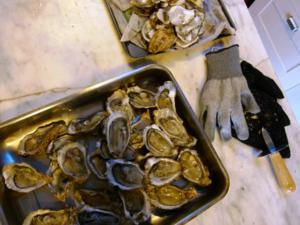
Be it in Provence or Paris, the dinner consists of numerous courses. Champagne and hors d’oeuvres mark the start, usually at 9 p.m. or later. Then there’s a seafood course with oysters, as well as other delicacies such as shrimp and smoked salmon. Oysters are a must. During the days preceding Christmas Eve, special oyster stands are set up outside of supermarkets. There are different varieties and sizes (and prices) of the mollusks. Opening them can be hazardous – bloody fingers often result.

Another essential part of this holiday dinner is foie gras (oversized liver from a duck or goose that has been force fed). This is a very controversial subject as many contend the poor birds suffer during the last weeks of their lives when tubes of corn are put down their throats. As an animal lover I feel guilty, but foie gras is a wonderfully sinful pleasure — smooth, silky, rich and exquisite in taste. As it is such a staple in the French diet, at least at festive meals, years ago I worked for a weekend at a foie gras farm in the Dordogne in western France to learn more about the delicacy. The geese led happy outdoor lives until they were brought indoors for the period of forced eating, but they did not resist the feeding. They were humanely butchered and every part of the carcass, not just the enormous liver, was put to culinary use. Is it any worse than stuffing American cattle, which are grass-eating animals, with corn in disgusting feed lots? Or crowding thousands of chickens in dark pens and over stuffing them. See the documentary “Food,” then decide.

Everyone is eager to give tips on foie gras preparation which is very tricky lest the liver get too hot and melt. My veterinarian even related his method. Preparing the raw liver for cooking is also a challenge. You must carefully and delicately remove the tiny veins without totally massacring the hunk of liver. Last year I took a course to learn how to master this procedure. The recipe I followed for final preparation called for the addition of Calvados and apples. Foie gras is traditionally served with toast, and sometimes a small serving of a fruit confit.

The foie gras course usually follows the seafood course, and precedes the main course which is often turkey. I served turkey to my Christmas Eve guests – an extra big, American-sized bird (20 lbs.) which I had specially ordered. The French were most impressed. No huge Butterballs in French supermarkets where birds are usually small, about 6 to 10 pounds. Another bird popular for the holiday dinner is guinea fowl. At friend Veronique’s, however, we had wild boar stew.
In Provence, it’s a tradition to have 13 desserts, symbolizing Christ and the 12 apostles, following the meal. Dates, figs, raisins, hazelnuts, almonds, nougat, fresh and crystallized fruit and (a type of flat bread) are among the selections, usually accompanied by a sweet wine.

There’s usually a 14th dessert as well — the , the Christmas log which is a cream-filled cake in the shape of a log that pastry shops sell during the holidays. Many are elaborately decorated. But some dedicated cooks, like my friend Lynne, make their own gorgeous version (see photo).
It’s not just in France that the meal is the main event of Christmas Eve. In New Orleans, due to the city’s strong French heritage, many restaurants offer Réveillon menus on Dec. 24.
Bon Appétit! Joyeux Noel!


Comments