


Great win, the Google grid and the coming of Fitbit


Congrats to the Ramdomizers for winning last Saturday against previously unbeaten DVTA/Villanova 3-2!! This clinches playoffs for us next week, July 11-12 at Frosty Hollow in Levittown. (Pictured above, left to right, Chris Kyper, Steve Hlava, Wanzell Flemming, Russell Chamberlin, Dr. Dave Bozentka, Satheesh Swaminathan and Tony Deimler).

Google Maps includes real-time traffic and so much more. It can tell you within a few minutes what time you’ll arrive walking, biking or driving within an 8-hour radius that I’ve experienced. It’s uncanny. It will soon be able to go indoors too.
Play it forward and consider you are on a grid. You have the status of everything within 8 hours. There is technology that can tell how full each store and theatre is. You know if there’s a line at Chick-Fil-A, your favorite carwash and movie theatre. Wegmans is jammed – hmmm, I’ll go to Wawa instead. Ok, that’s the grid. Now, factor in the data. When it rains, we see certain patterns. When we see these familiar patterns in the data, we know if it’s raining. Add more data sources and you get better information leading to better predictors It’s the same way that Google Flu Trends, which launched in 2008, monitors web searches across the US to find terms associated with flu activity such as “cough” or “fever”. It uses those searches to predict up to nine weeks in advance the number of flu-related doctors’ visits that are likely to be made. These types of “Big Data” indicators are the most accurate predictors we have. Ok, recapping, Google Maps, the grid, and more data being factored in daily.
Some fun facts:
Military upgrade. Britain’s armed forces are beginning to go beyond GPS with “quantum positioning”. By using powerful lasers to detect the effects of gravitational and magnetic fields on super-chilled atoms, the navy hopes to track its submarines to centimeter precision.
Sharing. British company, Presence Orb, wants to anonymously aggregate Wi-Fi signals given off by smartphones to provide real-time information about how full a bus is, for example. The main challenge is overcoming people’s aversion to that level of intrusion.
Sidestepping political controversy. Cartographers today can have their cake and eat it when it comes to borders. When Crimea was annexed by Russia in March, Google Maps showed the change to Russian users. American users were shown Crimea as “occupied territory”.
Your phone already knows where you live. Analog maps are passive, static tools. With Google Now, the latest Android devices can automatically learn your home and work locations by tracking your daily routine – tell your phone “take me home” and it will know where to take you.
Need a parking space? No problem. This is a great example of how smart phones really are changing behavior. Getting to your destination is the easy part; finding a parking space is tough. Parking App Luxe – http://blogs.wsj.com/digits/2014/10/23/new-valet-app-luxe-eases-parking-nightmares/ enables you to meet a valet in the city who’ll take your car and park it for $15. They funnel the cars to unused parking spaces in the city which keeps a lid on costs. They can also meet you with your car somewhere else in the city when you need to leave. Another behavior changer is Uber to which there is a marked decrease in DUIs during the popular happy hour times.
Public Transportation. In an ideal world, the maps of public transport systems would be dynamic. Tunnel Vision – currently only available for New York – is an app that overlays information on to subway maps showing users, for example, which stations are most likely to be crowded.
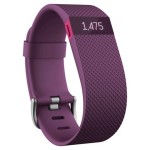
Fitbit HR is a game changer!
I wore out my previous Fitbit. I really wanted an Apple Watch but given the (average) $500 price and the 1/2-day battery life I don’t think I’ll get one just yet as tracking steps and sleep are my primary interests.
So introduce the Fitbit Charge HR for $150. Since I always have my phone on silent, I now know who’s calling thanks to the Bluetooth Caller ID. This is helping me not miss calls at work, home or on the tennis court.
Heartbeat – this has been fun. I have a standing heartbeat of 62 on average and a workout heart beat between 116 and 122. Some great features are: Automatic Sleep – no turning sleep on and off as I tend to forget to turn off. Exercise mode, tracks heartbeats and it’s a feature that you turn on/off and yup, I forget to turn that off too. The battery lasts several days and there is great fitness functionality and MyFitnessPal integration (among many others).
Fitbit (FIT) NYSE is currently valued at $4.1B per their IPO two weeks ago. Not to shabby for a San Francisco based company that was founded in 2007.

Comments