


Fantasy Feast: Star Wars: The High Republic (Phase I)

Way back in the pandemic, Star Wars began releasing their new project- The High Republic. At the time, I had just come back from the one-two punch of Rise of Skywalker and the finale of Mandalorian Season 2. I was essentially done with really caring about the franchise since it was clear that they had just decided they couldn’t evolve beyond the Skywalker saga. Granted The Clone Wars’ seventh season had ended perfectly, but that was a rare bright spot for me. I just could not bring myself to get hyped, and it felt that I had just been left behind as a fan.
Then the first season of Andor hit, and I was prompted to go back and watch the Bad Batch and began a small spark of the old Star Wars fan in me. So, I got a bit hyped for Ahsoka, which I enjoyed before The Acolyte came out. Now, I am probably in the minority, but I liked The Acolyte quite a bit, although it had pacing problems. It did give us my favorite lightsaber fight in years, and it also featured a crucial glimpse into the High Republic era. I admit that I wasn’t exactly ready to dive into the larger High Republic project, but I did really like how different it felt compared to the prequel era. This truly depicted the Jedi at the height of their powers, and the subsequent children’s show The Young Jedi Adventures would build upon this setting, presenting the Jedi through the eyes of the younglings within their ranks. Still, despite watching a few episodes, the High Republic project remained something that only vaguely interested me.
Skeleton Crew was also an unexpected delight, but of course it would be Andor Season 2 that sent me back into the loving arms of a galaxy far, far away. I desperately wanted more stories that felt different from the Skywalker Saga, and after looking at the structure of the High Republic project, it clicked into place that this was a well-thought out plan with several talented writers contributing to one epic story. I wanted to experience the content (as close as possible) in release order, and in the process, I got instantly hooked. This is a bit of an overview and review of the various pieces of content in the multimedia experience that is the High Republic.

THE CHARACTERS
The first thing you have to understand about the High Republic is that there are a LOT of characters. Rather than try and list every single character here, I think it’s a good idea to note that, in general, the stories revolve around certain groups of characters. The main adult novels follow a trio of Jedi- Stellan Gias, Elzar Mann, and padawan Bell Zettifar. While their stories intersect with so many supporting characters, they are often the lens in which the plot is viewed through. They show up in other projects as well and thus their depiction is in the hands of several writers. But their core story is told through the adult novels.
The young adult books on the other hand follow Master Cohmac Vitus and padawan Reath Silas as they interact with the various other core characters in the project. The first book helps establish who they are- and introduces us to a ton of new side characters- while the second YA novel uses their story to also propel the narrative for the main protagonist of the junior novels- Vernestra Rhow. A good bit of advice for fans is to keep in mind the authors of these projects made for younger audiences. If Justina Ireland is attached, then Vernestra and padawan Imri will feature heavily, even if the book also contains other main protagonists.
Daniel José Older, on the other hand, tends to focus on his High Republic Adventures padawans, using his junior novel to flesh out a new addition to that group while also including Vernestra and Imri, undoubtedly the main focus of all of three novels at this level. He also uses his YA book to introduce his cast of characters to an older audience, pairing them with Reath and Chomac and even taking the time to flesh out moments from his own comic. Those who read his book, Midnight Horizon, and want to know more about these padawans will certainly want to check out his comic series.
Finally, the Marvel comics focus on the Starlight Beacon Jedi, particularly Avar Kriss, Keeve Trennis, and Sskeer. It’s an interesting decision, since Starlight Beacon is at the center of the first phase. But the choice to flesh out the story of the beacon’s marshal- Kriss- in the comics reiterates that this is a multimedia project. While there are plenty of projects with seemingly one-off focuses on side characters, this is pretty good distillation of the main corners of the High Republic project. One last piece of advice is that if you do like a character, it might be worth following them into the works of the other authors to track their development.

THE ADULT NOVELS
Phase 1: Light of the Jedi consists of three adult novels, three young adult books, and three junior novels (and a bunch other material). The first adult novel that kicks off the whole project is, appropriately, Light of the Jedi written by Charles Soule. Soule is no stranger to the franchise, having written several comic books including Darth Vader and the flagship Star Wars title for Marvel. The story is deceptively simple- a disaster in hyperspace leads to debris from a crashed ship exiting hyperspace lanes at various intervals, often on collision courses with planets. Through this disaster we get to see the true power of the Jedi as a united collective, using Avar Kriss to join them all through the Force.
The novel introduces a ton of characters including Stellan Gias, Bell Zettifar, and Elzar Mann, who- along with Kriss- would be the closest thing to central characters the series has. But that’s the beauty of the High Republic- you are introduced to dozens of characters, many of whom you will follow more closely in other projects, and some even introduced in those pieces of content before finding their way into the main adult novels. Outside of the Jedi, perhaps the most important protagonist is Chancellor Linah Soh who is hyper focused on her Great Works to unite the Galaxy as the frontier of space is brought into the Galactic Republic. Chief among these works is Starlight Beacon- a grand space station that serves as the central Republic outpost in that region.
Of course, every good story about good versus evil needs a capable protagonist, and the first novel introduces fans to the Nihil- a group of space pirates with a unique leadership structure. It’s almost like a pyramid scheme for murderous marauders. The new recruits are sought after by the Strikes who can rise to the rank of Cloud if they recruit enough people, and then can climb the ranks even higher to become a Storm in one of the three Tempests. Every Tempest as its own Tempest runner, and at the center of the organization is The Eye, who has much bigger plans than simply pillaging the frontier. The Eye provides the Nihil with Paths- ways of jumping in and out of hyperspace that no other beings in the galaxy have figured out- allowing them to seemingly appear and disappear during battle.
In the Clone Wars series (and Legends novels/comics), the Jedi struggle with how war changes their order, bending their principles to never-ending bloodbath that chokes the galaxy. There’s a similar theme in these novels, but it’s taken even further since their enemies are flesh-and-blood instead of the battle droids the Jedi so often face in combat during the Clone Wars. As the Galactic Republic expands into Nihil territory, how do the Jedi ensure peace without being stretched too thin? And how do they stop an enemy with no restraint without taking away more lives than necessary? Indeed at least one major character brushes so close to the Dark Side that it forever changes his destiny.

The first phase of the High Republic is appropriately called “The Light of the Jedi,” as we see the light burning as bright as can be in the first novel before tragedy strikes in the following books, threatening to extinguish that light for good. The Republic Fair becomes too tempting a target for the Nihil in the novel The Rising Storm, and in the final adult novel of the phase, Marchion Ro- the Eye of the Nihil- executes his grandest plan by comprehensively attacking Starlight Beacon.
The mysterious and deadly creatures Ro uses against the Jedi gives him the edge he needs in these galactic confrontations. The novels have the unique opportunity to depict the interactions between our heroes and these creatures like a fever-dream, with the Jedi being overwhelmed with fear to the point of hallucination. The final novel in particular clues the audience in on the use of the creatures before our Jedi protagonists discover just how much danger they are in, giving the book a palpable sense of dread and danger.
If I were to pick which book I liked the best, it would probably be The Fallen Star by Claudia Gray- a true rockstar in the Star Wars literary world. Of all the novels in the first phase, it feels the most like the Jedi are truly embodying hope in the most dire and desperate circumstances. Every Jedi gets to show their bravery and ingenuity- not to mention their decency. Plus, we get some familiar faces in the form of Geode, Affie Harrow, and Leox Gyasi who were all introduced in Gray’s Young Adult entry Into the Dark as the crew of the Vessel. In many ways, The Fallen Star feels like a culmination of the many threads spun by the novels and the comic books.
If there is a critique to be made about the second and third book, it’s that Avar Kriss takes a huge backseat due to her story primarily being explored in the Marvel comic books. Sometimes it feels like her absence is convenient, but in Fallen Star we get a couple of snippets hinting at her story, making the journey feel a bit incomplete. However, overall the adult novels do a great job incorporating characters and story beats from other pieces of media without the feeling that something big is missing. If anything, it feels like a comics event where the main story is in the adult novels, but the other pieces of media add in so much context and smaller moments to paint a much larger picture. As a comics fan, High Republic is the kind of thing that works for me, but I could see others simply not wanting to invest that much time or money into the experience.

THE YOUNG ADULT NOVELS
It might be tempting to skip these entries, but I highly recommend giving them a try. They are well written and introduce concepts and characters before they find their way into the main story, like the aforementioned Vessel Crew. In fact, Into the Dark not only gives fans a good set of non-Force using protagonists, it also introduces the Drengir, a species of carnivorous plants that are steeped in the Dark Side. These creatures would feature heavily in the comic books, while also playing an off-page role in the adult novel The Rising Storm as another danger in the galaxy keeping Avar Kriss and several Jedi busy while the Nihil plan their attack.
We also get different kinds of Jedi specialties like history and artifacts as well the Wayseekers- Jedi who have chosen to follow their own path laid out by the Force without needing direct instructions from the Jedi Council. They are given a lot more freedom and Wayseeker Orla Jareni instantly sets herself apart from all of the Jedi that we have met so far. She also has history with Master Cohmac Vitus, as the two led a botched hostage recovery effort when they were padawans. This past seems to set up Phase II, with the mission taking place on a lost moon in between Eiram and E’ronoh- two planets whose rivalry seems to be the subject of some material in the second phase.
And so, these Young Adult novels not only introduce fascinating characters to the larger tapestry that is the High Republic project, but they are crucial to the world-building necessary for such a vast exploration of the era. The second young adult novel, Out of the Shadows, does this nicely. The book operates as a sequel to Into the Dark as well as the junior novel A Test of Courage. The main protagonists from Into the Dark– Chomac and padawan Reath Silas- are joined by the youngest Jedi Knight Vernestra Rwoh and her apprentice. I would argue that Vernestra is the main character of the book, joined by pilot Sylvestri Yarrow as we are introduced to the latter’s mother and discover her place in the current galactic conflict.
In addition to an inclusion of technology crucial to the end of the phase, Out of the Shadows also concludes the story of Mari San Tekka- introduced in Light of the Jedi as the ancient genius woman who discovers the Paths. The San Tekka’s story of hyperspace exploration are furthered here as well, with a rival family, the Grafs being introduced as the more vicious side of the exploration and exploitation of space. Finally, a key plot point is introduced here- namely that Tempest Runner Lourna Dee has been mistakenly outed as the Eye of the Storm. This development would be further explored in an audio drama and the comic books.

The final YA book- Midnight Horizon– is the best example of why readers shouldn’t skip these younger novels. The book ties in threads from the High Republic Adventures, The Fallen Star, and the last two YA stories, culminating in a narrative that feels like the real ending to the first phase. Or, at least, it feels like the perfect transition into Phase II: The Quest of the Jedi, as the eye of the protagonists turn towards the mysterious past to save the present. The book manages to complete a major arc for Chomac and Reath, flesh out characters like Ram Jomaram and Master Kantam Sy, and give readers even more world-building as the culture and politics of Corellia are explored. The ending is a breathtaking bit of action that will have your fists pumping in the air.
One final interesting wrinkle- all three YA novels introduce non-jedi young women into the fold with complicated relationships to their parents. Affie Harlow is an orphan who suspects that her adoptive mother- and head of a shipping guild- isn’t telling her the truth about the guild’s operations. Sylvestri Yarrow’s mother is revealed to be hiding her own history, and Out of the Shadows unravels this mystery through Sylvesti’s eyes. Finally, Midnight Horizon features Crash- technically introduced in a short story from a one-shot comic- inherits her bodyguard business from her mother, but the two remain close, nonetheless. They have different philosophies and approaches to friendship in the business, but it is clear that Crash’s mother has not abandoned her maternal role. It will be interesting to see if all three end up sharing the page together at some point.
THE JUNIOR NOVELS
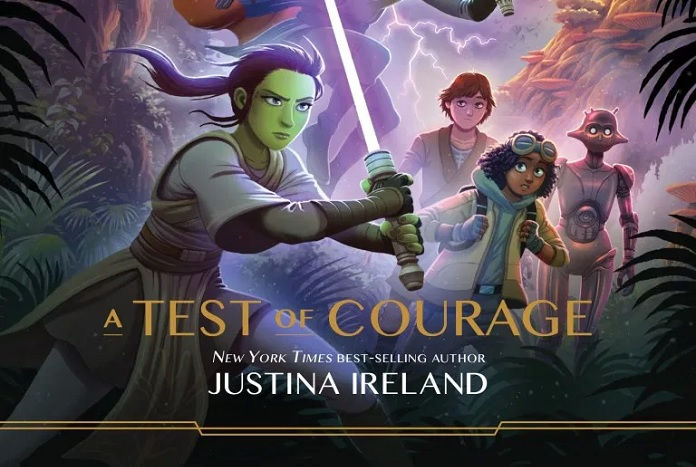
These short stories are admittedly much simpler than the young adult books, but they are fun experiences, nonetheless. The Nihil come off a bit less intimidating in them, although they are still quite murderous. The first junior novel, A Test of Courage is the official introduction of Vernestra Rhow (Justina Ireland would write both Test and Out of the Shadows). It’s a strong bit of characterization as we get to see a newly knighted teenager deal with essentially leading a mission after tragedy strikes. A padawan marooned with her, Imri, also gets a worthy introduction as we quickly see how his extreme empathy can be somewhat of a hindrance rather than an asset. His relationship with Vernestra continues into Out of the Shadows and is one of many highlights the first phase.
As with the young adult novels, there are some sprinkles of world building, hints of past conflicts that may be explored later- namely the history of Dalna, a world considering joining the Republic. But they mainly exist to introduce characters who will play larger roles in future media and act as an advertisement for those individual projects.. One could almost view them as cynical attempt at corporate synergy, but the stories are usually fun enough to justify their own existence. Plus they may also help younger readers develop their literacy skills as they follow their new favorite characters into books on a higher reading level.
Race to Crashpoint Tower is a bit different than most of the younger content the High Republic offers. Most of them take place either far away from the central conflict or even after the adult novels. Crashpoint Tower is a story that takes place during The Rising Storm, and it tells the story of padawan Ram Jomaram as he tries to save his home Valo during the Nihil raid depicted in Storm. These events are mentioned, and at least one scene appears in both Crashpoint Tower and Storm, giving the former a greater sense of importance. It comes off as a crucial side tale that fleshes out a plot point from the larger saga. In that way, Crashpoint Tower feels like a much more important book than its predecessor.

Written by Daniel José Older, Crashpoint Tower also features several characters from the all-ages comic High Republic Adventures. The author uses the book to springboard Ram into his comic series and as an advertisement to entice readers unfamiliar with the series. At this halfway point of the multi-media project, it’s clear that the authors want the books to feel like they are telling one big story, not unlike the Marvel Cinematic Universe. And for the most part, they succeed.
And on that note, Mission to Disaster feels almost like a post-credits tease for Phase II: Quest of the Jedi as it constantly hints at the secrets of Dalna that will almost certainly be explored. It also acts as a direct sequel to Test of Courage, seeing Vernestra and Imri try to rescue Avon Starros after she is kidnapped by Nihil. Once again, the younger nature of these novels is apparent as these Nihil do a smidge less murdering than usual and often seem quite stupid. But the story also ends with a hints towards Avon’s mother and her true intentions, revealed in both a short story and The Fallen Star.

THE COMICS/MANGA
I would perhaps say that the Marvel comic line plays an even bigger role in the saga than some of the YA and junior books. The core series, The High Republic, follows Jedi Knight Keeve Trennis and her former master, the Trandoshan Sskeer who was injured in the novel Light of the Jedi. For readers of those adult books who want more of an exploration of the Drengir threat so often mentioned, the first half of the series will be exactly what the doctor ordered. It even wraps up some of the threads from Into the Dark, and perhaps most importantly allows readers to actually follow the journey of the Starlight Beacon’s Jedi Marshall, Avar Kriss.
The next arc picks up nicely from Rising Storm as well as Out of the Shadows, seeing Lourna Dee eventually hunted down as the supposed Eye of the Nihil. In between things, readers finally get a visual glimpse of the mysterious creatures that instill so much fear into Force users, although the depictions are obscured quite a bit through the nightmarish haze. Readers never quite get the good look they may want to in the core series, but the moment is saved for another time.
Marvel also put out two miniseries and both are crucial to the larger story going on in the High Republic project. First, Trail of Shadows sees Jedi investigator Emerick Caphtor team with private eye Sian Holt as their separate mysteries become entangled. While Holt’s hunt for an assassin tied to the Nihil isn’t quite as integral to the grand saga, it helps ground the miniseries in its noir roots. But the main attraction is the hunt for the enigmatic creatures who cause madness and fear in Jedi. The books expertly- and creepily- ties them to a nursery rhyme heard by the Jedi growing up. Undoubtedly this will be picked up later, but it’s a tantalizing tease nonetheless and importantly gives them a few different names. Ironically one of the names for these beings is The Nameless.

We also get an even better glimpse of the Nameless, obscured by shadow still, but with their tentacled faces and claws clearly visible. This comes at the end of the miniseries which coincides with both the attack on Starlight Beacon and the High Republic Adventures characters as well. The coda in Adventures picks up immediately after the final issue of Trail of Shadows, and given that both series share the same writer, this is certainly part of the concerted effort to ensure that the comics feel connected rather than isolated stories.
Before I discuss the High Republic Adventures, I do need to include a brief about the two-part Marvel comic Eye of the Storm. Written by Charles Soule, this miniseries allows for a neat bookend of Phase 1 with Soule writing the opening and closing installments. The miniseries chronicles the history of Marchion Ro’s people and the earlier days of the Nihil, giving readers a glimpse into Ro’s motivations. The story is presented as a two act play split into several scenes, culminating in the best look at the Nameless in the final panels. It also ends with the Nihil using a device introduced in Out of Shadows to essentially disrupt all hyperspace lanes encroaching into their territory, cutting off the frontier from the Republic. It’s a development that is sure to cause a lot of dramatic conflict in the future, and readers get their first glimpse here!
The High Republic Adventures is a book that was originally published by IDW, but the trades are now released through Dark Horse. The core series follows ship full of padawans joined by several masters including, briefly, Yoda. It’s a fun, light series with engaging characters, particularly the budding relationship between the Force user Zeen (who is not being trained as a Jedi) and padawan Lula. There is a bit of childlike silliness like a teenager being accepted into a high-ish ranking of the Nihil which just feels like a way to pit Zeen against a former friend. But again it ties into the whole project nicely with plenty of characters who show up in other books like Qort, Lula, Farzala and my personal favorite Jedi- Torban Buck aka BUCKETS OF BLOOD.
While the core series features a decent-sized cast, the miniseries High Republic Adventures: Monster of Temple Peak is much smaller book, although still character-driven. Ty Yorrick was introduced in The Rising Storm as a former Jedi that had gained a reputation as a “Saber for hire.” It’s a neat twist on the bounty hunter archetype, and many of her missions involve taking down monsters. The miniseries is a nice read, and the trade includes several short stories worth a read from the annual issue. But it’s probably the least tied into the core story of all the comics, although if Ty is to become a more important character down the line, this could change.

The manga series TheEdge of Balance may be the only bit of material in the High Republic project that feels truly superfluous, at least for the first book. While the planet the story takes place on has been name checked, Lily Tora-Asi and Jedi Master Arkoff have yet to make an impact on the main plot. That said, the story is jammed with cameos from characters like Stellan Gios and the Drengir. If anything, the manga represents a major theme of the High Republic- namely the ability of the Jedi to act as beacons of hope for the Republic. The second book intersects nicely with The Fallen Star and the High Republic Adventures comic, and we finally get to see our characters interact with the larger universe. And so, it is certainly more possible now that Lily will play a more important role in Phase III. Overall, I think the Edge of Balance manga books exist to give readers an expanded avenue to experience Star Wars and again may be used to develop a love of literacy in all of its various forms.

CHILDREN’S BOOKS, AUDIO DRAMA, AND SHORT STORIES
I won’t be covering any of the reference books, so I decided to lump these in together. The children’s books are distillation of the main action sequences from each adult book (the Hyperspace Disaster, the attack on the Republic Fair, and the assault on Starlight Beacon) with a focus on the Wookie Jedi Burryaga. For parents wanting to share these stories with their kids and to eventually hone their reading skills, these are good to keep around. I wouldn’t say they are a necessary read though, as they essentially depict events found in the other books. (The titles are The Great Jedi Rescue, Showdown at the Fair, and The Battle for Starlight for those interested)
The audio drama Tempest Runner is a different story. Importantly, this is not an audiobook, as there is no narrator describing the action to us. It is a drama with voice acting, sound effects, and music. It can be a little hard to follow at times (and there is a helpful script book to assist there) but it’s a very well-done story that sheds light on the Tempest Runner Lourna Dee. It feels like she is being set up to become a bigger piece of the puzzle, so a character study like this is much appreciated. My biggest critique is that main story- Lourna being imprisoned by the Republic who does not realize who she is- feels a bit repetitive as it appears that right after her escape in the Tempest Runner, she’s once again captured. In essence, the only thing it adds to the overall story is that the Republic assumes she is dead, so when she does show back up in the comics, it surprises the Jedi.
It’s still fun though, and my instincts tell me that the story will become even more important down the line. The short stories on the other hand feel like they exist to give readers a greater sense of life on Starlight Beacon. These were originally printed in the magazine Star Wars Insider but each two-part story has been collected in Starlight Stories. Most focus on the administrator Velko Jahen as she navigates the various dangers and politics of the station. She is often joined by Chief of Security Ghal Tarpfen, and both characters get a bit mention in the novels. Tarpfen’s arc eventually let’s the reader discover a traitor, so there is some importance here. Likewise, the first story features Pikka and Joss Arden, a married couple of mechanics who play a crucial role in the final book. Like Tempest Runner and Monster of Temple Peak, these stories simply allow readers to get a bit of a better handle on smallest of characters. They may be skippable in terms of the larger plot, but I recommend seeking them out just to flesh out the world a bit more and to answer a mystery posed in Mission to Disaster.

THE HIGH REPUBLIC PHASE 1: LIGHT OF THE JEDI
In terms of a proper Jedi story, I’m not sure there’s been a better project since the Old Republic games and novels. It combines the self-contained nature of those stories with the unique threat faced in the Legends New Jedi Order saga. There are a lot of characters to keep up with (readers may wish to snag the character encyclopedia as a result), but they feel like living breathing people/aliens. So much of the multimedia project is dedicated to character growth and providing readers with various kinds of stories. Into the Dark feels like a haunted space station tale, Trail of Shadows is a noir thriller, and The Fallen Star is a true tragedy. If Andor is Star Wars at its science fiction best, The High Republic may just represent the franchise at its fantasy apex.

Comments