


A Look Back at Phase 4 of the Marvel Cinematic Universe

Introduction
There are so many think-pieces on the fourth Phase of the MCU and its supposed status as evidence of the downfall of the franchise that I could not contribute significantly any more if I wanted to. And I don’t want to. Because, despite a few rocky entries, the MCU still remains, in my estimation, the best franchise in the history of popular cinema. Perhaps it’s recency bias and my emotional high at the most recent entry, but I would like to give a rundown and a bit a of a defense of Phase 4.

The Films
Since there is SO much content, I’ve decided to break things up into categories to get a look at consistency, quality, themes, etc. The elephant in the room, however, is the COVID-19 pandemic which shelved releases for a year and condensed Phase 4 into a mere 2 years. This would result in 4 films being released in 2021 along with 5 shows, which is really an oversaturation. I wonder if Phase 4 had been 3 years if it would be looked back at more fondly. And perhaps, given time, people will come to appreciate these releases.
The MCU’s fourth phase of films began with an odd project- a standalone Black Widow movie taking place BEFORE Infinity War. Given that Natasha had sacrificed herself in Endgame, there was a lot of skepticism that audiences would care about exploring the character further along with the consensus that Marvel had simply waited too long to give a founding Avenger (in the movies at least) her own solo film. In the end, it’s difficult to judge the success of the movie, since it ranks on the lower end of MCU box office rankings, not even breaking $400 million, though still outgrossing a few Phase 1 films like Captain America: The First Avenger. However, the film was released simultaneously on Disney+ and theaters had limited capacity due to the pandemic.
For my money, the critical consensus is right on the money. The supporting cast, particularly Florence Pugh and David Harbour, help carry the movie into some emotionally resonant territory. Scarlett Johansson has full control of the character by this point, and the movie acts as a nice coda to Endgame. The action villain is admittedly a bit weak, with a characterless Taskmaster being a silent warrior throughout the movie. However, Taskmaster’s tie to the mastermind villain and Natasha’s own past tie the themes very nicely, and the opening highlighting human trafficking is startling effective in its town. Natasha and Yelena are the backbone, and Pugh plays very well off of Johansson. Though a bit forgettable and most certainly a case of “too little, too late,” Black Widow gave us a new character that’s already popped up in other stories and Pugh’s Yelena is a welcome addition to the family.
By the time Shang-Chi and the Legend of the Ten Rings was released, 4 shows had premiered on Disney+ with varying degrees of success. Shang-Chi, however, would net a global box office take modestly higher than Black Widow but with much higher critical acclaim. The movie feels extremely different than other MCU entries, although it still has the tone and formula of so many of the past features. The movie fully embraces the magical side of Marvel complete with monsters and dragons. Simu Liu and Awkwafina have fantastic chemistry, and the action scenes- with a smidge of kung fu influence thrown in for good measure- stand out as some of the best in the franchise. Tony Leung gives the MCU a compelling villain in a slightly more accurate adaptation of The Mandarin than seen in Iron Man 3. Although, don’t think the filmmakers here forgot about Ben Kinglsey’s version, as they work to incorporate his Trevor Slattery and even a short film featuring the character.
While fun and packed with character moments, Shang-Chi also limits its ties with the broader MCU to mostly cameos, only broadly hinting at things to come. For me, this was refreshing and definitely needed in order to truly broaden the MCU. However, The Eternals appeared to take this approach a bit too far. By introducing so many characters and telling a long story with them out of chronological order, the action scenes for the first 35-40 minutes lack any real investment. The backstory is so long that I do understand, to a degree, why they had to drag so many elements out, but it makes for a frustrating watch. However, the movie does pick up a bit with the (re)introduction of Kingo. Kumail Nanjiani is a comedian at heart, and his interplay with his agent, status as a Bollywood actor, and general charisma give the movie a sense of levity that it desperately needs. The cast is pretty stacked here, with Angelina Jolie, Barry Keoghan, Lia McHugh, Brian Tyree Henry, Lauren Ridloff and Don Lee all giving us interesting characters who are all damaged in their own way. There’s just not much time to process the themes given the sheer amount of characters being introduced, even with the length.
While Gemma Chan’s Sersi is a grounded and well-rounded character, she- and essentially the co-lead Richard Madden- don’t really give the movie the energy it needs to reach into the upper echelon of the franchise. Still, while the themes are a bit undercooked, the exploration of what exactly it means to be human are very interesting, and the movie’s tone is a stark departure from the MCU. Director Chloe Zhao finally gives fans a darker entry, and critics mostly rejected it, with Eternals earning the franchise’s first rotten score from Rotten Tomatoes. Perhaps if this had been released as a series, there would have been a chance for these characters to breathe. Guardians of the Galaxy proved you can introduce a team in a single film, but the core team at that point is comprised of five members. Eternals attempts to introduce brand new lore and 10 characters in a single film.

Nevertheless, the fourth MCU film of 2021 would put disprove the claim that The Eternals represented the death of the MCU. Disney/Sony released Spider-Man: No Way Home to fan and critical acclaim, and a near $2 billion dollar global box office haul- the third highest of the MCU. Being sequel to the box office hit Spider-Man: Far From Home and the last film in the successful MCU Spidey trilogy might have been enough to produce solid numbers. But Marvel had a trick up its sleeve- the Multiverse. By bringing the concept properly into the films, No Way Home was able to wrap up Tom Holland’s arc while bringing in both Toby McGuire and Andrew Garfield, plus a slew of their most popular villains.
If Eternals explores what it is to be a human, No Way Home explores what it really means to be Spider-Man. The Spideys of old and their rogues gallery are not simple nostalgia grabs, they all work to reinforce the idea that Peter Parker is a true, selfless hero. Willem Dafoe gets to play Green Goblin at his most sadistic, and the result is a truly brutal fight with a gut punch of a crescendo. The film allows things to get fun again as the Spider-Men team up, but the emotional stakes are truly felt by the end. Peter loses a lot here, but the trilogy sets the character up to stand on his own- free from the MCU allies, the Stark tech, and really any friends, Peter sets out with a simple costume to fight crime in one of the better endings to an MCU flick.
The Multiverse would prove advantageous to the continuation of the MCU, with Doctor Strange in the Multiverse of Madness proving to be another box office success. In addition to carrying over the Multiverse concept, the film features the titular character who also appeared in Spider-Man: No Way Home while being directed by Sam Raimi- the director the first Spider-Man Trilogy. The stage was set for a movie which would maybe give audiences a clue as to where the MCU would be heading. Perhaps these ties to No Way Home and the broader MCU gave the film a box office boost, as the film was a clear financial success. Speaking of successes the second Doctor Strange film also appeared to accomplish the goal of furthering the Multiverse Saga- the term used to refer to grand story of Phases 4-6- exploring the concept of colliding universes (“incursions”), an idea ripped straight from my favorite Avengers run by Jonathan Hickman.
While Xochitl Gomez is a likeable companion as America Chavez, the film is still super divisive in its choice to have Elizabeth Olsen’s Scarlet Witch go full heel turn as the villain. This was an especially hard pill to swallow after seeing her deal with grief in the show WandaVision, and the exact amount of influence the Darkhold has is unclear. For me, I wish the film had explored more universes and gotten a bit more creative and refrained from using cameos as cheap props. It has a few signature Raimi bits- including a possessed Doctor Strange corpse- which are enough to give the movie a distinctive flavor. This was really the first film to directly carry over elements from a Disney+ show, and as an experiment of marrying the streaming series and film world, I would argue the experiment failed a bit in its goal, feeling a bit disjointed.
The division would continue with Thor: Love and Thunder, with audiences and critics alike, with reactions ranging from “it’s okay” to “it’s the worst MCU film ever made!” This is where I take a bit a of a detour from my fellow fans, although I would never place this film in the higher echelons of the franchise. The movie attempts to incorporate some of the broad strokes of Jason Aaron’s Thor run, with the introduction of the movie’s villain Gorr the God Butcher and the return of Jane Foster. Just like the comic book which inspired the movie, Foster is battling cancer, and in her fight, is deemed worthy by Mjolnir and gifted with the power of Thor.
It’s probably in this Foster story that I find a deeper connection to the film than maybe others. The thing that gives her the power to help others is also eliminating the chemo from Jane’s body, thus killing her faster. The concept of a cancer patient ending life on her own terms resonates with me as someone who lost his mother at a young age to cancer. It’s hard not to feel some sort of triumph for Jane even if that somber story is built into a film with an abundance of absurdist humor. Despite my personal feelings on the movie, it’s tough to argue that tonally, Love and Thunder is a bit all over the place.
The movie also illustrates a growing technical problem- namely that of the decreasing CG quality. Numerous pieces have been written about how digital effects studios are working under nearly impossible conditions with tight deadlines and insufficient pay. And one only needs to look at Rocket Racoon in this film and compare the digital rendering to any of the other Guardians of the Galaxy films to see the degradation. It’s not that the film looks awful, it is simply that some CG effects are conspicuously worse than others, creating an inconsistent experience.
Nevertheless, the film has a banging soundtrack (brought to you by Guns N Roses), an emotionally resonant finale, and ends with a sweet moment between Thor and his newfound (and in real life) daughter, hinting at the next generation of heroes. This next generation would be explored further in Black Panther: Wakanda Forever, the final film in Phase 4. Wakanda Forever had a lot of baggage before it was even released. Its predecessor was one of the top grossers of the MCU, and had even garnered an Oscar nomination. Put simply, Black Panther was a bona fide phenomenon, so its sequel would always have big shoes to fill. But then, Chadwick Boseman shockingly passed away. No one would have blamed Marvel for simply never returning to the world they built in Wakanda, although there also calls for the studio to recast the role as well. Instead, director Ryan Coogler decided to address his passing head-on.
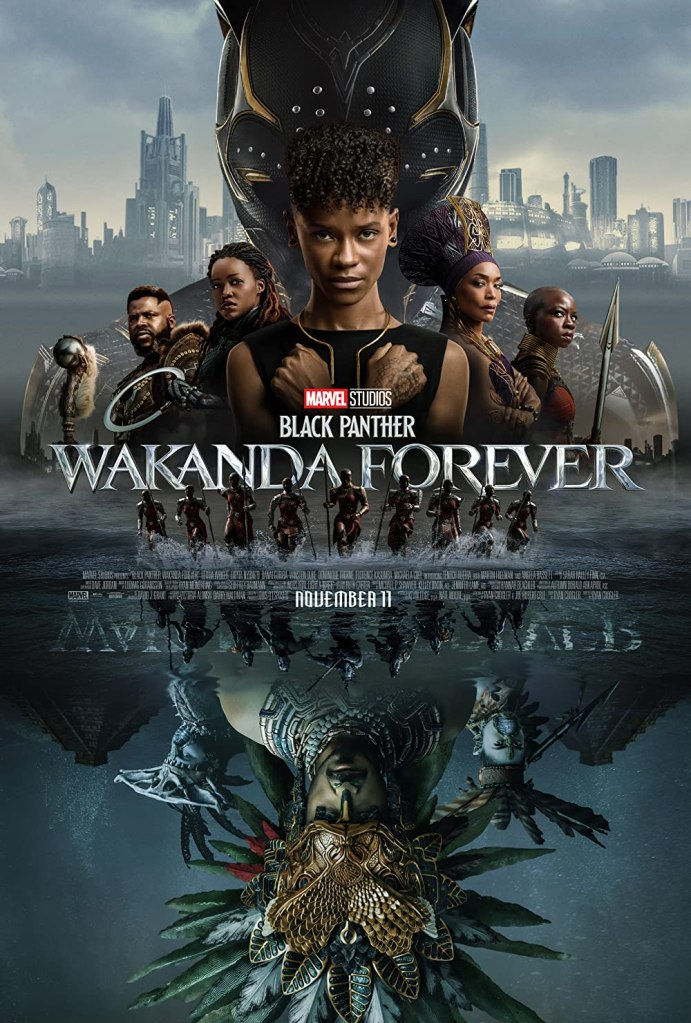
Wakanda Forever opens with a fantastic funeral sequence and manages to introduce both Iron Heart and Namor while juggling the grief of Shuri and her embrace of the Black Panther mantle. In short, it does a lot with its runtime, and the end result is a tragic, personal, and poignant sequel that incorporates a fantastic villain in Namor, leaving the audience clamoring for more. It might not reach the highs of its predecessor, although it has a much better final fight. There’s a bit less focus here and maybe a bit too many digital shots, but Angela Bassett nails her performance of a queen who has lost her family trying to lead her daughter to her destiny.
The movie also contributes to the growing plot threads started by the post-credit scene in Black Widow. While not as grand a saga as the multiverse, the introduction of Valentina Allegra de Fontaine in that movie signals a story the MCU has plans for. Julia Louis-Dreyfus might not have wowed audiences yet with her performance as Fontaine, but she has so far hired Yelena for a job, indicated that she views Wakanda as a national security threat, and- in a Disney+ series we are going to discuss in the next section- recruited a Captain America knock-off. Her inclusion in the Tunderbolts movie may give us a clue to where this story is headed.
Overall, Phase 4 films are an inconsistent bunch. There are plenty of bad moments like Russell Crowe’s Zeus in Thor: God and Thunder, the inconsistent CGI throughout the movies, and the failed rollout of the Multiverse. In the films of Phase 4, there is one solid entry (No Way Home) relying on the previous two decades worth of Spider-Man films and one decent entry which uses the Multiverse for quick cameos like Captain Carter, Patrick Stewart’s Professor Xavier, Black Bolt from the Inhumans TV show, and of course the fan dream casting of John Krasinski as Reed Richards. Rather than being hyper focused on a singular Avengers-style team-up, Phase 4 instead split some of its groundwork into building intrigue towards Fontaine and connecting Shang-Chi’s Ten Rings to some vague development in the larger MCU. In some ways, this feels more like Phase 2, which contained some Infinity Stones and a bit more Thanos, but otherwise busied itself with character arcs, the micro-franchises within the MCU, and introducing new elements like the Guardians of the Galaxy and Ant-Man. Avengers: Age of Ultron does not feel like a culmination film, and neither does Black Panther: Wakanda Forever. However, to give a more comprehensive picture of Phase 4, we have to discuss:
The Disney+ Shows
Here’s where Phase 4 truly begins to carve out its legacy. The real opening salvo for this phase was WandaVision, a unique project infusing various sitcoms of the decades with a heart wrenching story of grief, centered around one of the MVP’s of the franchise- Elizabeth Olsen’s Wanda Maximoff. As the title suggests, she is joined by her husband The Vision, played with wonderful eccentricity by Paul Bettany. At first, the show is a puzzlebox, with the two characters finding themselves in a black and white show reminiscent of a bygone era of sticoms including the Dick Van Dyke show and I Love Lucy. The audience remains just as clueless as our heroes, but it is clear that SOMETHING is up in Westview. The shows change, color is added, a pregnancy is revealed and fast tracked before the curtain is peeled back a bit to reveal that Wanda is indeed subconsciously trapping her family and their town in an evolving sitcom based on the shows Wanda watched growing up.
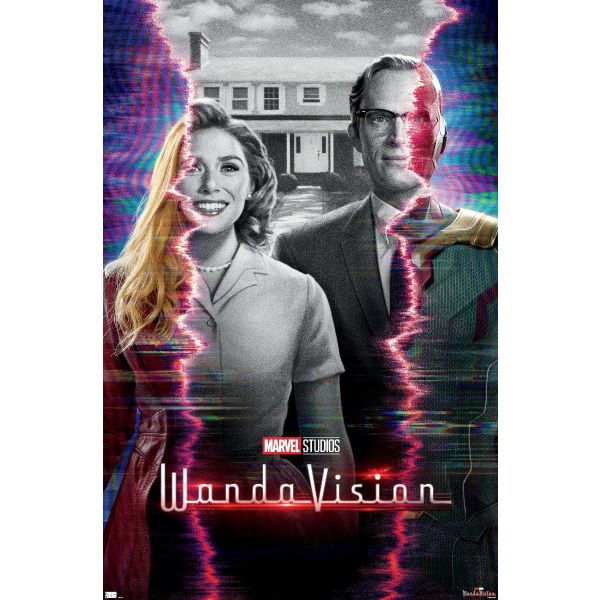
Right off the bat, things were different with this show. Every episode teased something new, and the introduction of Wanda’s twin children hinted at a potential Young Avengers team-up in the future. The show also brought back lesser known characters like Darcy from the Thor franchise and Agent Jimmy Woo from the Ant-Man films, while introducing an adult version of Monica Rambeau- last seen as a child in Captain Marvel. In fact, the show balances its MCU connections well, with clear lines drawn to the upcoming film The Marvels with the superhero origin of Rambeau and addressing the snap back from the perspective of the person snapped away by Thanos. Not everything lands perfectly- the introduction of Evan Peters as Quicksilver sent many online in a tizzy with theories about the Multiverse and the X-Men due to the fact that he played the character in those films. However, he ended up being a rather dumb punchline.
The finale might not be perfect, but between Kathryn Hahn’s excellent Agatha Harkness and two different Visions having a battle of logic rather than fisticuffs, the show ends on a high note. Viewers got to see the depths of Wanda’s despair and what Vision meant to her. It’s a shame that she essentially gives back into that despair with the loss of her children and becomes a full-fledged villain in Doctor Strange in the Multiverse of Madness. One could argue- as Doctor Strange does- that it’s really the Darkhold corrupting Wanda, but this also removes a bit of her agency as well. Despite these issues, WandaVision remains a high benchmark of creativity for the MCU.
Next up was Falcon and the Winter Soldier- a politically charged series which weighed the legacy of Captain America heavily while exploring the fall out of half of the world’s population suddenly coming back. The Flagsmashers might be a dumb name, but the group makes excellent points about how returning to the status quo after five years is nearly impossible without causing some outgroup pain. Likewise, Wyatt Russell plays the government handpicked Captain America- John Walker- and expresses deep insecurity at not being able to beat supersoldiers or even the warriors of Wakanda. This pathway leads to Walker taking serum himself to give him the edge he thinks he needs.
While that political intrigue largely holds the series up plot-wise, the backbone of the show is the relationship between Sebastian Stan’s Bucky and Anthony Mackie’s Sam. Their interplay with both Walker and Zemo- another highlight of the series- feels earned and organic. The series tackles the issue of race head-on, and even introduces Isiah Bradley- a black man the government experimented on to create the next super soldier- and his grandson who becomes the Young Avenger Patriot in the comic books. However, as good as the series was, the heel turn of Sharon Carter didn’t feel quite as earned as Sam’s title as the new Captain America. Most egregiously, the show fumbles John Walker, dropping all of the nuance and conflict to give us a short lived team-up with MCU comedy banter. Although after Fontaine gives him his USAgent moniker, I did have some hope that the character could find a better place in the Thunderbolts. Falcon and the Winter Soldier is a transitionary series at its heart, finding a way to truly give Sam Wilson- at that point a fairly underutilized character- the mantle and legacy of Captain America.
Loki could hardly be argued to be an underdeveloped character. Heck, one could claim that he was the co-lead of Thor: The Dark World. But that Loki was dead, and in his place in the series is a variant the audience last saw in Endgame escaping Shield Custody. Once again, there’s a bit of a puzzle box feel here, with layers of the Time Variance Authority being peeled back in each episode. The show revels in its worldbuilding, as it lays out the rules and bureaucracy of time travel. The show quickly becomes something of a buddy cop series with Loki and Owen Wilson’s Mobius tracking down a Loki variant who appears bent on destroying the TVA and the Sacred Timeline.
Said variant is actually Sylvie, a woman who also becomes Loki’s love interest. There’s a lot of fun to be had here, with a planet full of Loki variants being a particular highlight. When we get to the end of the show, the real seeds of the Multiverse Saga are planted. The introduction of Kang- through his He Who Remains variant- would be confirmed as the first appearance of the saga’s main villain. Jonathan Majors plays the character as a bit of a defeatist omnipotent man who knows that there is little he can do to prevent the birth of the Multiverse and thus the proliferation of Kangs trying to kill each other at the expense of all reality. Admittedly the scenes are harder to watch given Majors recently revealed conduct, but the lore is still important. This is a show that gets a bit drawn out but ends strongly. Tom Hiddleston does his best not to make this Loki redemption arc feel like the last, but there are parts that still feel a bit like a rehash. Nevertheless, the show has some great ruminations on fate and free will. Most importantly, it sets the stage up nicely not only for the MCU, but the next season of Loki as well.
Additionally, the birth of the Multiverse gave us perhaps the most frustrating entry of Phase 4- What If…? The show is animated, and honestly recent announcements at Marvel suggest that these animated shows aren’t considered truly part of the Phases, although the studio has maintained in the past and on Disney+ that it is an official entry into the MCU. Almost every episode except the last two is a mini-pilot of sorts, leaving the narratives unfinished. Heck, they’ve already announced a Marvel Zombies cartoon and the first episode of the second season is a direct continuation of the first episode of the inaugural season.
There are neat ideas here, like Captain Carter, T’challa as Star Lord, Ultron being able to see the show’s narrator, and Killmonger as Tony Stark’s savior. Additionally, the use of MCU actors as voice actors provides a nice bit of closure for fans of Chadwick Boseman. Unfortunately, actors aren’t all skilled voice actors, and many of these performances fall flat. For every cool idea introduced, there’s a dull or uninteresting episode, although the finale does try and tie these stories together. The series is mostly good for some wish fulfillment and exploring the Multiverse. In some ways, the show is as “canon” to the MCU as the Sony Spider-Man films, with the prime MCU universe being the compass for the series. Which is to say that some these characters and variations might show up in a similar fashion, as mere cameos.

Following this animated look at the Multiverse, the next show would be decidedly more grounded, tackling the aftermath of Hawkeye’s descent into a full-on killer as Ronin. This show would allow the final Avenger- Jeremy Renner’s Clint Barton- their own solo project, while introducing another Young Avenger into the MCU. Hailee Steinfeld’s Kate Bishop makes an immediate impact, and her chemistry with Renner and Florence Pugh’s returning Yelena give the show its beating heart. Well that and Lucky the dog who is ripped straight from the acclaimed comic book the show is based on. At the center of the series is a simple story about a man trying to get home to his family for Christmas.
Nevertheless, Hawkeye would do a lot of heavy lifting for the MCU, furthering the Fontaine plot, granting more closure to Black Widow’s death, and introducing both Echo and Kingpin- with Vincent D’Onofrio reprising his role from the Netflix series- into the franchise. The latter introduction is hinted at throughout but only confirmed in the penultimate episode via a blurry photo. This would become an issue of several Disney+ shows, waiting until very end to introduce a big bad, thus presenting an underdeveloped villain. Despite this, Hawkeye is a fun and breezy Christmas show, with plenty of heart and humor, giving arguably the most human Avenger his due and showing exactly how inspirational he can be.
If there’s one thing that these shows have demonstrated, it’s that the MCU struggled to escape the shadow of Infinity War and Endgame. Every show dealt directly with either the dead, the Snap, or some other bit of fallout. That’s why Moon Knight was a blast of fresh air. Completely divorced from the larger franchise with only fleeting references to locations, Moon Knight follows Steven Grant- played wonderfully by Oscar Isaac- as his mental state becomes undone and he is drawn into a world of Egyptian gods.
This is another mystery box show, but with one with loads of creativity. There’s some great humor with the multiple personalities of Moon Knight clashing, and some fun action set pieces as a result. The series has an engaging love interest in May Calamawy’s Scarlet Scarab and a haunting villain in Ethan Hawke’s Arthur Harrow. Perhaps most importantly, Moon Knight is a showcase for how to present Egypt as a thriving modern nation. In sum, Moon Knight is an example of things that Phase 4 gets largely right- namely the ability to have creator-driven, experimental stories.
If Moon Knight is the MCU as its most separated, the next two series would offer fans various stories connected heavily to the larger franchise. Ms. Marvel literally has a convention dedicated to the Avengers and various heroes of the MCU, and the titular character is directly inspired by Captain Marvel. Yet, these connections are not a deterrent, they are simply an opening door to a confident series that understands its source material and has found a new star in Iman Vellani. Watching her play Kamala Khan, it’s tough to remember that this is the young actress’s first gig. The only comparison I can think of is maybe Evanna Lynch, who seemed by her own admission to be born to play Luna Lovegood. Vellani is, in real life, a huge MCU fan, having grown up with the franchise.

The show has a buzzing energy throughout, and introduces American fans wonderfully to Pakistan while giving a Cliff Notes version of the nation’s fought history. The supporting cast in New Jersey are also strong, grounding a series which centers around a high schooler who can create light constructs and even time travels at one point. The finale brings all these elements together in a fight with emotional stakes, as the community bands together. It’s not a perfect adaptation, but it does the character and her world justice. The Khans and their love of Kamala gives the character her compass, costume, and name, and it’s a joy to watch them grow together. Plus there’s a Bollywood-style wedding dance! What more could you want?
Lastly, the MCU would truly shake things up with the fourth-wall breaking She-Hulk. The pilot does some heavy lifting, explaining why Jennifer Walters gets is the titular character, revealing she is the cousin of the Hulk who accidentally dripped some blood into a wound of Jennifer’s after a car accident. Tatiana Maslany is hilarious throughout the series, and the court room scenes are the highlight of the show. Cameos are packed to the gills, with Daredevil, Wong, and the Abomination all showing up, with some (WONG) leaving a bigger impact than others.
The series has a natural limitation, in that the lead character- while in Hulk form- is a CG creation. When that CG is good, the show chugs along, but it can be iffy at times, threatening to take the audience right out of whatever shenanigans are going on. The finale also potentially breaks the fourth wall irreparably, literally going to the writer’s room of the show and a robot version of studio head Kevin Fiege to undo cliché elements. It’s a very creative but anti-climactic way to end series. It’s not a series for everyone, and for those who were growing exceedingly weary of the increasing amount of MCU humor, She-Hulk is probably an insufferable experience.
Putting it All Together
There’s a reason I compared Phase 4 to Phase 2, rather than a new Phase 1. Nearly every project of Phase 2 exists in the shadow of the first Avengers film. Whether it’s Loki’s capture, Tony’s PTSD, Captain America living in the modern world, or the introduction of Thanos, Phase 2 is about fallout and resetting the table for the next big event. Likewise, Infinity War and Endgame are MASSIVELY bigger than the Avengers’ first foray. Thus, it is hardly surprising that so much real estate is designated to addressing the consequences. Every show outside of Moon Knight contains some reference to the events of Endgame, while the films attempt to establish the new status quo.
The best films of Phase 4 either introduce new heroes like Shang-Chi or addressing the fallout of events within their mini-franchises. Spider-Man: No Way Home sees Peter directly deal with his secret identity being revealed in the previous entry, while Black Panther: Wanda Forever wrestles with the death of T’Challa. In the middle of the pack is Black Widow, which introduces Yelena, Taskmaster and the Red Guardian to the MCU for future use. On the lower end of Phase 4 movies, Eternals tries its best to create new heroes but falters a bit due to the sheer amount of central characters, while Thor: Love and Thunder ties up Thor’s time with the Guardians and his relationship with Jane Foster rather than truly breaking any new ground. Doctor Strange emerges as the most frustrating entry, not because it is awful, but rather due to its dropping the ball on two major aspects. The synthesis of WandaVision into the broader MCU was clunky, portending a potential hurdle for future Disney+ series and their importance to franchise. Secondly, it represents a real missed opportunity in how to incorporate the Multiverse into an individual film, with only a few universes being explored and fan servicey cameos that don’t do much else beyond popping the crowd. Combined with the inconsistency of What If…?, it’s quite understandable that fans are left skeptical of the Muliverse Saga’s intrigue and quality.
That said, the shows have had largely varying tones stories, and even with Eternals’ critic and box office woes, it’s tough to argue that this Phase of the MCU hasn’t been the most creative of the franchise. There were actual risks here, and not all paid off. But I still applaud those chances, as the MCU became a variety show of sorts. It might not be great if you want every project to feel “must see,” but I argue that it’s actually better if fans don’t feel obligated to watch products that don’t interest them for the sake of the Multiverse Saga. Phase 4 was certainly inconsistent, but its highs- namely Ms. Marvel, Moon Knight, WandaVision, and Spider-Man: No Way Home- are among my favorite of the franchise. The lows never meet floor of say Thor: The Dark World, making it a tough call for me to agree with the notion that it’s the worst phase of the MCU. It never gets on the roll that Phase 3 was on, but it is confident enough to tell its own stories, which are substantially more diverse than prior offerings.
Mid-Credits Scene: Marvel Studios Special Presentations
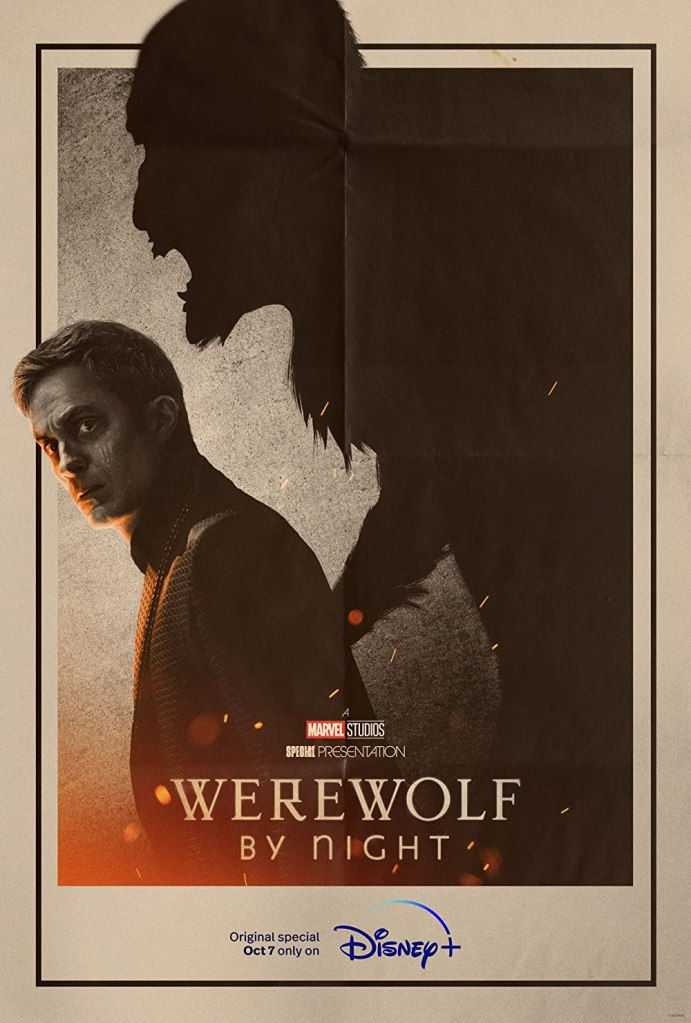
As one final appeal, Phase 4 introduced one more avenue of telling stories- The Special Presentations. The MCU released two of these specials in 2022, the first of which could be considered a Halloween Special. Werewolf By Night is a simple story of a group of cryptid hunters in a competition for the mysterious Bloodstone. Much like Moon Knight, there are very few connections to the broader MCU. What makes the short film stand out, however, is its commitment to the horror tone, with black and white photography and even some great practical effects. The werewolf design in particular harkens back to the Universal Studios classic The Wolf Man. Composer Michael Giacchino tries his hand at directing, and the result is so successful that he’s been tapped to remake the 1950s giant ant film Them!. And hey, we even get Man-Thing, what more is there for a Marvel horror fan to ask for?
Not everyone is a horror junkie, and for those seeking a more lighthearted affair, The Guardians of the Galaxy Holiday Special is a wonderful throwback to the Christmas specials of yore. James Gunn returns to remind the MCU that he remains one of their best creators, with a firm handle on his characters. It would have been easy to do a throwaway story with no consequences, but the special instead reveals that Mantis is Peter Quill’s sister, a development which would be recognized in the next film. Once again, Gunn brings a banging soundtrack and even enlists the help of the great Kevin Bacon to sing the final song. Christmas cheer is abound, and Drax and Mantis get a chance to shine. Not a bad way to spend 40 minutes on the holidays.
Post-Credits Scene: Phase 5 Begins
Weirdly, the reason I was prompted to write this article is because of the most recent MCU film- Guardians of the Galaxy vol 3. Phase 5 is two films in, and it has given us a critical dud and box office disappointment in Ant-Man and the Wasp: Quantamania. I could spend some time here defending that film. For sure, it’s not one of my favorite MCU films, but I was actually charmed quite a bit by the imagination of the Quantum Realm. Living buildings/ships, gooey creatures, and all sorts of interesting critters populate the film, and I find most of it (not M.O.D.O.K) quite beautiful. Nevertheless, the film was supposed to introduce Kang to the MCU fans who don’t have a Disney+ subscription, and even the positive reaction to Majors’ performance and character couldn’t generate enough interest to make the movie a blockbuster smash. Tales of super hero fatigue and the death of the MCU- largely due to the reaction of Phase 4 and even the failure of recent DC films- began to propagate.
Then the third volume of Guardians of the Galaxy was released. After a solid but unspectacular opening, the box office would see an astoundingly small drop as word of mouth spread that this is the antidote to that feeling of fatigue. While I embraced Wakanda Forever and several of the series wholeheartedly, Guardians of the Galaxy Vol 3 generated a unique emotional response in me- unadulterated joy in the face of some kind of loss. The film is a catharsis on film. In fact, one could see the film as a metaphor for the MCU. It started out as a plucky studio and- against all odds- creating something that banded fans across the world together. The Marvel family grew over the years, but families eventually grow apart. Guardians of the Galaxy vol 3 is about this separation, and tells its characters and audiences that it’s a natural occurrence, one that can be embraced with mature acceptance. For some fans who don’t want to leave the MCU out of a sense of obligation, it’s almost permission to say “hey, it’s okay.”

Now, me? I’m still all in on this franchise. But I have a found family of my own, and I feel guilty all of the time for living so far away from them. Sometimes I wish I could go back to seeing each other far more often. I won’t say we’ve grown apart emotionally, and we still love each other. But there is distance, and the last few moments of Guardians of the Galaxy Vol 3 recognizes this distance occurs in many families. The characters don’t mourn this change, they embrace while hinting that, the family doesn’t end, it just continues to grow and change. That can be scary, but it’s also inevitable. So it’s okay to shed some tears before dancing around like an absolute maniac- preferably to “Dog Days” by Florence and the Machine- celebrating a life well lived.

Comments